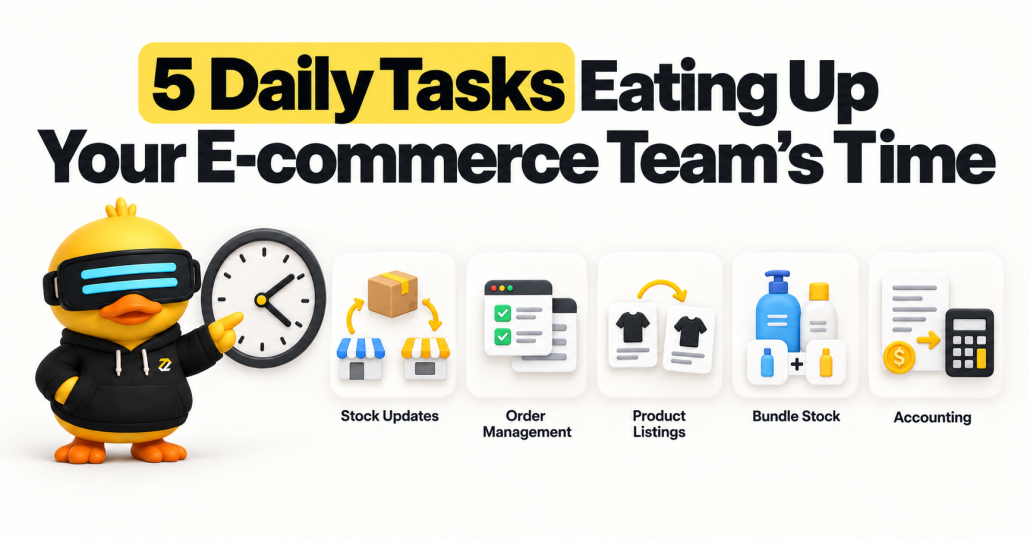
5 Daily Tasks Eating Up Your E-commerce Team’s Time
Your team has been busy all day.
Stock quantities have been updated. Orders have been checked. Product details have been copied into another marketplace. Sales information has been prepared for accounting.
But the works still seems like not able to finish in time and keeps piling up.
When you sell across multiple channels, small tasks can become a constant cycle of checking, copying and updating. To reduce manual work in e-commerce, start by identifying where your team handles the same information more than once.
Where do e-commerce teams lose time every day?
E-commerce teams can lose time updating stock across stores, switching between seller center to process orders, recreating product listings on every available channes, checking bundle quantities, manual key in sales into accounting software and resolving picking mistakes. Connecting these workflows helps reduce repeated work and gives teams more time to handle customers, exceptions and business growth.
Here are six places to look in your own operation.
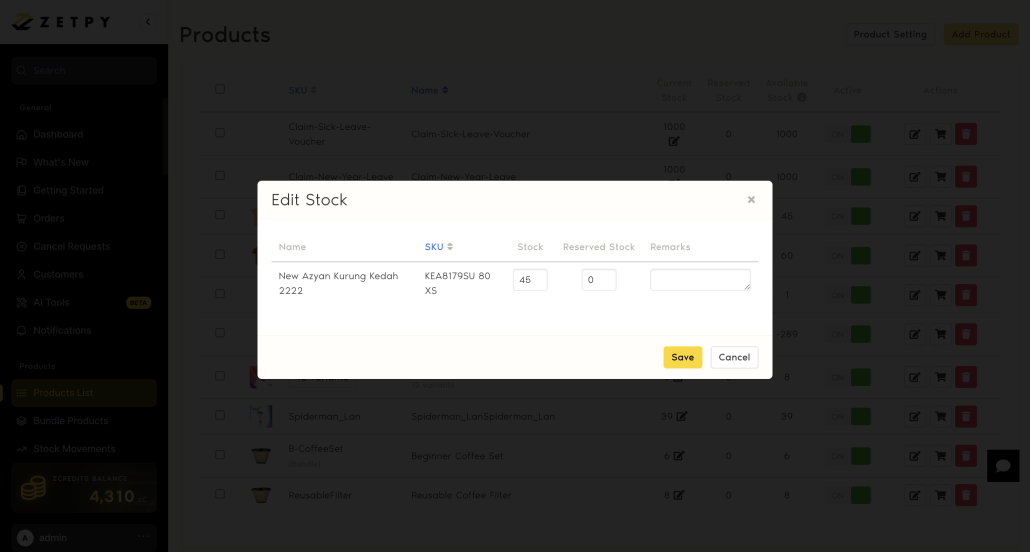
1. Updating stock across multiple sales channels
An item sells on Shopee. Someone adjusts its quantity on Lazada. Another colleague checks whether the website still shows the correct stock.
Repeat that process across dozens of products, and inventory updates become a task that never quite ends.
The problem becomes harder when two people update different stores using different stock figures.
How Zetpy helps
Zetpy provides centralised inventory management and automatically updates stock across connected sales channels as orders are fetched. This helps reduce manual stock updates and the risk of overselling. Explore Zetpy’s inventory management features.
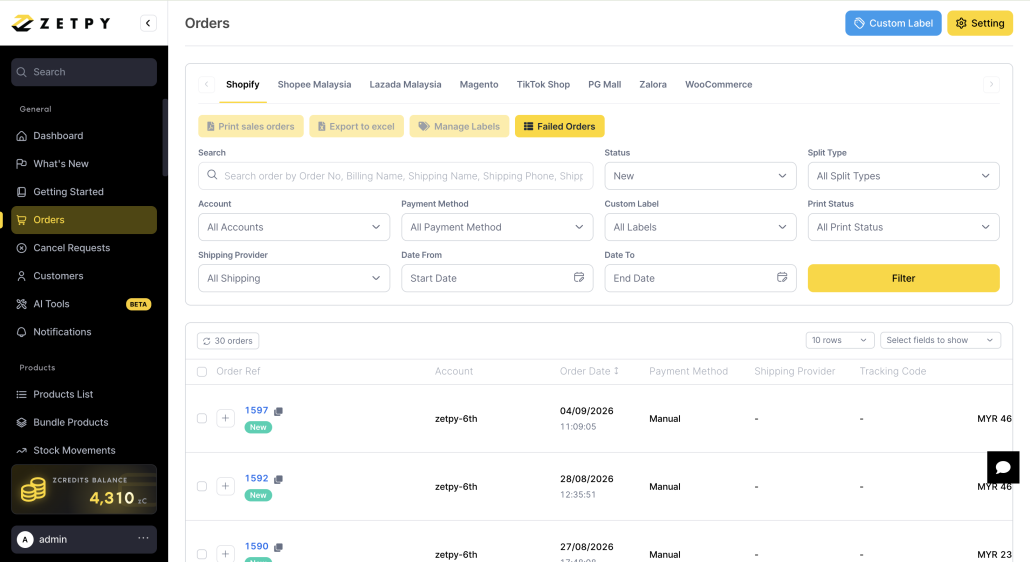
2. Switching between dashboards to manage orders
Your morning starts with several browser tabs.
One shows Shopee orders. Another shows Lazada. A third shows TikTok Shop. Your team checks each one, works out what needs processing and prepares shipping documents.
The time cost includes both switching screens and repeatedly rebuilding the order list in your head.
How Zetpy helps
Zetpy brings orders from Shopee, TikTok Shop and Lazada into one dashboard and supports bulk order processing and airway bill printing. An airway bill, or AWB, is the shipping label used for delivery. Learn about Zetpy’s centralised order management.
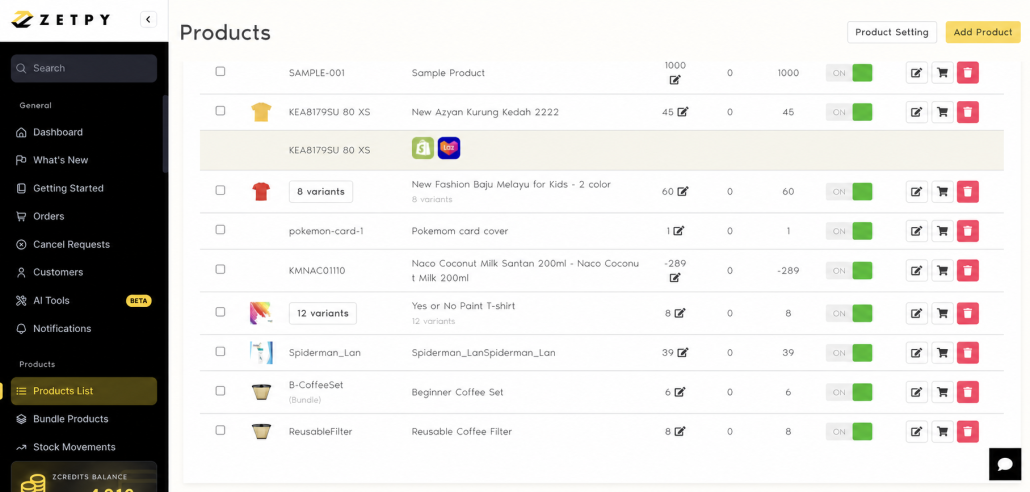
3. Recreating product listings for every store
You have a new product ready to sell. Your team uploads the images, adds the description, enters the product code and checks the variations.
Then they do it again for the next store.
If a detail changes later, someone has to remember to update each listing. Miss one, and customers may see different information depending on where they shop.
How Zetpy helps
Zetpy lets you create products and variations centrally, then upload them to supported sales channels, including Shopee, Lazada, TikTok Shop, Shopify and WooCommerce.
Explore Zetpy’s product and channel capabilities.
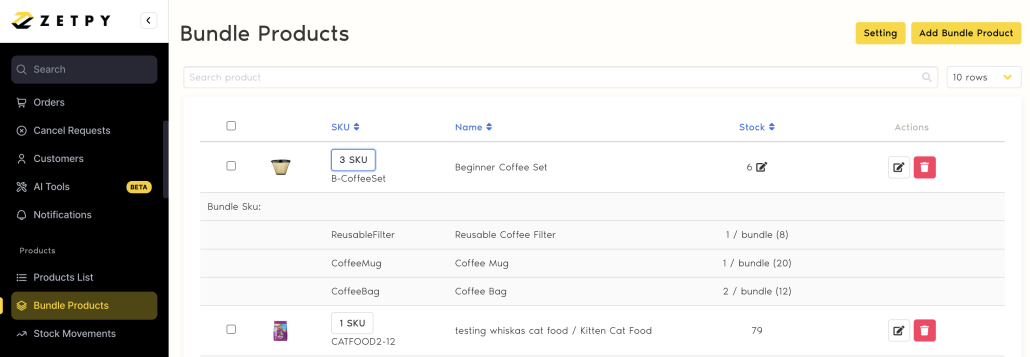
4. Manually calculating stock for product bundles
Say you sell shampoo on its own and as part of a shampoo-and-conditioner set.
When a customer buys the set, the stock for both individual items needs to be deducted too. Otherwise, you could continue selling quantities you no longer have.
This becomes more complicated when the same item appears in several bundles.
How Zetpy helps
Zetpy’s Product Bundle feature automatically deducts the stock of the individual items when a bundle sells. This helps you manage stock shared between standalone products and sets.
This is Zetpy’s own bundle feature, which is separate from the bundle tools offered by marketplaces.
See how Zetpy Product Bundles work.
5. Re-entering online orders into accounting software
An order has already been recorded in your sales channel.
Then someone needs to enter its details again in the accounting system in order for your sales channel and accounting system tally.
Repeated data entry takes time, and a wrong product code or missing detail can create more work during checking and reconciliation.
How Zetpy helps
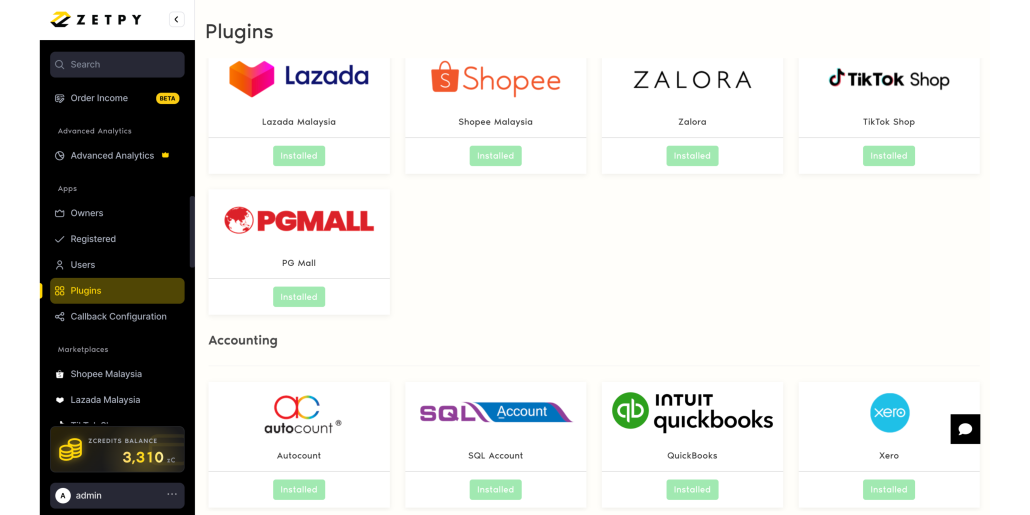
Zetpy offers accounting integrations, including Autocount, QuickBooks Online and Xero. The integration supports syncing stock and online orders as invoices, and/or sales orders reducing the need to type the same sales information again.
How can you find your team’s biggest daily time drain?
Run a simple five-day time audit.
Ask each team member to record:
| What to record | Example |
|---|---|
| Repeated task | Updating stock in separate stores |
| How often it happens | 12 times a day |
| Time spent each time | 3 minutes |
| Additional rework | Checking a mismatched quantity |
| Systems involved | Marketplace dashboards and a spreadsheet |
Calculate the daily workload using:
Daily time spent = task frequency × minutes per task
For example, a task performed 12 times at 3 minutes each takes 36 minutes a day. Across five working days, that adds up to three hours.
This is an illustration, not a measured Zetpy customer result or a promise of time savings.
Start with a task that happens frequently, follows clear rules and requires the same information to move between systems. After making a change, measure the workflow again, including time spent checking errors or exceptions.
Give your team more time for work that needs their attention
Stock updates, order processing and accurate records all matter.
But every repeated entry deserves a closer look. Could the information flow between systems? Could several orders be handled together? Could a barcode check replace a manual comparison?
Zetpy connects product, inventory and order workflows across supported sales channels and business systems. See what Zetpy can connect.
Bring your most repetitive daily task to a Zetpy demo. We can help you explore which features fit your workflow and what setup is needed.
Book a Zetpy demo today to see it in action
Frequently asked questions
How can I reduce manual work in e-commerce operations?
Identify tasks where your team repeatedly copies, checks or updates the same information. Prioritise a frequent, predictable task, connect the relevant systems and measure the time spent before and after the change.
What is multichannel inventory management?
Multichannel inventory management means managing stock for products sold through more than one sales channel. A central inventory system helps coordinate stock updates across connected stores.
How does Zetpy help with daily order management?
Zetpy consolidates orders from supported sales channels into one control panel. Teams can review order information and updated statuses without checking each store separately. View Zetpy’s order management features.
Can Zetpy connect e-commerce orders to accounting software?
Yes. Zetpy offers integrations with accounting systems including AutoCount, Xero and QuickBooks. The available workflow depends on the integration and its configuration. Explore Zetpy’s accounting connections.
Which task should my team simplify first?
Start with the repetitive task that consumes the most time and has clear, consistent steps. Stock updates, order processing and duplicate data entry are useful areas to audit. Keep responsibility for checking exceptions clearly assigned.