Bridging the Gap: Why an Omnichannel Retail Strategy is Essential for Success
Not too long ago, the rise of ecommerce had many experts predicting the “retail apocalypse,” which meant the inevitable death of the brick-and-mortar store. However, the reality has turned out to be quite different. Physical stores are not dead. They are evolving.

Today’s most successful retailers understand that offline and online channels are not competitors. They are two sides of the same coin. Implementing a strong omnichannel retail strategy is no longer just a luxury. The modern consumer does not see a brand as a “website” or a “shop” because they just see the brand. Most of shoppers expect their journey to be completely fluid between physical and digital spaces.

If you are running your retail locations and digital channels separately, you are leaving money on the table. You need to link physical and online store operations to thrive. Here is why embracing offline to online commerce is an absolute necessity for your business growth.

1. Delivering a Seamless Customer Journey

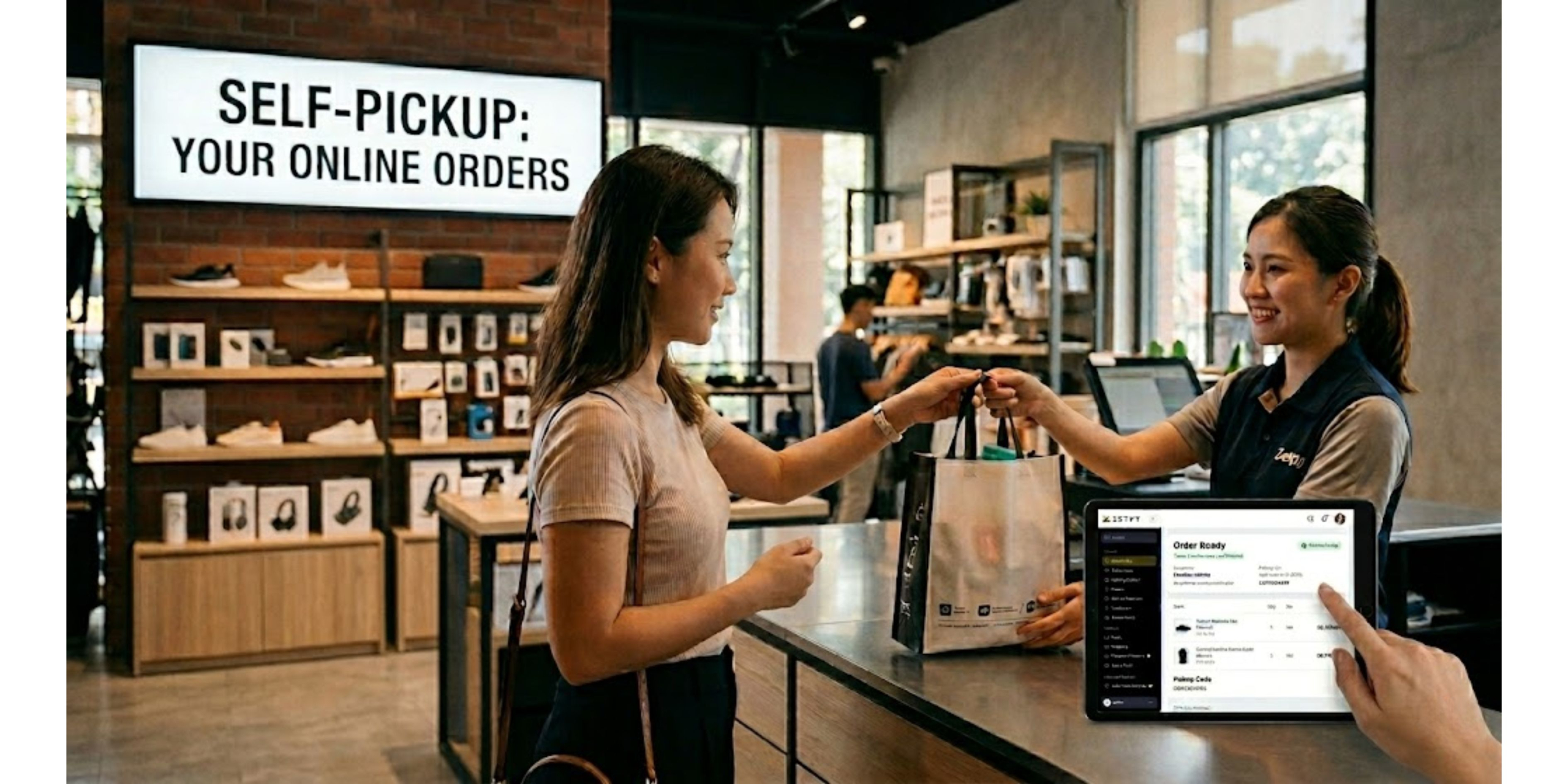
The modern shopping journey is rarely linear. A customer might discover your product on a marketplace like Shopee or TikTok Shop, browse your brand’s own website to check for deeper product details, and then decide to visit your physical location to see it in person. Alternatively, they might purchase directly through your own website and choose a self-pickup option to avoid shipping fees and get the item immediately.

While marketplaces give you massive reach and handle standard delivery, your own website and physical store can bridge the gap for local convenience. When your entire system is connected, you provide a true unified retail experience where customers can transition from your website to your storefront without friction.

2. Unified Inventory Management

Nothing frustrates a customer more than seeing an item marked “In Stock” online, only to drive to your store and find the shelves empty. Conversely, having inventory sit in your stockroom while an online buyer is told an item is “Out of Stock” costs you sales.

This is where integrating your offline Point of Sale system with your digital sales channels becomes critical. Using a data platform like Zetpy makes this process incredibly smooth. Instead of manually updating spreadsheets across Shopee, Lazada, TikTok Shop, your own website, and your physical store, a centralized system provides real time inventory sync. Every time a sale is made anywhere, stock levels update everywhere. This prevents overselling, reduces stockouts, and gives you peace of mind.

3. Smarter, Data-Driven Insights

Data is the lifeblood of modern retail. When your online and offline operations are siloed, you only get half the picture.

Connecting these channels allows you to build comprehensive customer profiles. You can track buying behaviors, preferences, and purchase history regardless of where the transaction took place. Platforms that consolidate this data help you uncover trends you might otherwise miss. For example, you might discover that a specific demographic prefers to research items on marketplaces but finalize the purchase in person at your store. Armed with this comprehensive view, you can create highly targeted marketing campaigns.

4. Maximized Sales and Increased Foot Traffic

Your online channels are powerful marketing tools for your physical location, and the reverse is equally true.

An integrated system allows you to use your physical store as a fulfillment center for orders placed on your own website, speeding up local deliveries. Furthermore, offering in-store returns or exchanges for items bought through your web store is a massive driver of foot traffic. Once that customer is back in your store making a return, there is a high probability they will browse and make an impulsive exchange or an entirely new purchase.

5. Consistent Brand Identity

If your online prices, promotions, or product descriptions differ vastly from what a customer finds in your physical store, it creates confusion and erodes trust.

Synchronizing your operations ensures that your brand message, pricing strategy, and promotional campaigns remain consistent. A unified front reassures customers that they are getting the best experience and the correct information, no matter how they choose to shop with you.

The Bottom Line

The dividing line between physical and digital retail has blurred permanently. Consumers across the region demand convenience, flexibility, and consistency.

Building a solid omnichannel retail strategy transforms your business from a fragmented operation into a connected powerhouse. It streamlines your backend operations and delights your customers. Bridging this gap does not have to be an operational nightmare when you have the right technology doing the heavy lifting in the background. The future of retail belongs to the connected, and the best time to start building those connections is today.

Book a Demo to learn how Zetpy can connect your online channels and physical store.
Finding the Right Fit: Why Growing Sellers Are Choosing Zetpy

Choosing an omnichannel platform is a major step in your operational journey. As your e-commerce business scales, your needs naturally evolve. What worked for you a year ago might not be the perfect fit for your workflow today.

We recently welcomed a new wave of sellers to Zetpy and took the opportunity to ask them what drove their decision to migrate. Their feedback was incredibly insightful, highlighting that as operations grow, flexibility and ease of use become just as important as the features themselves.

Here are the top three reasons these businesses found their ideal fit with Zetpy.

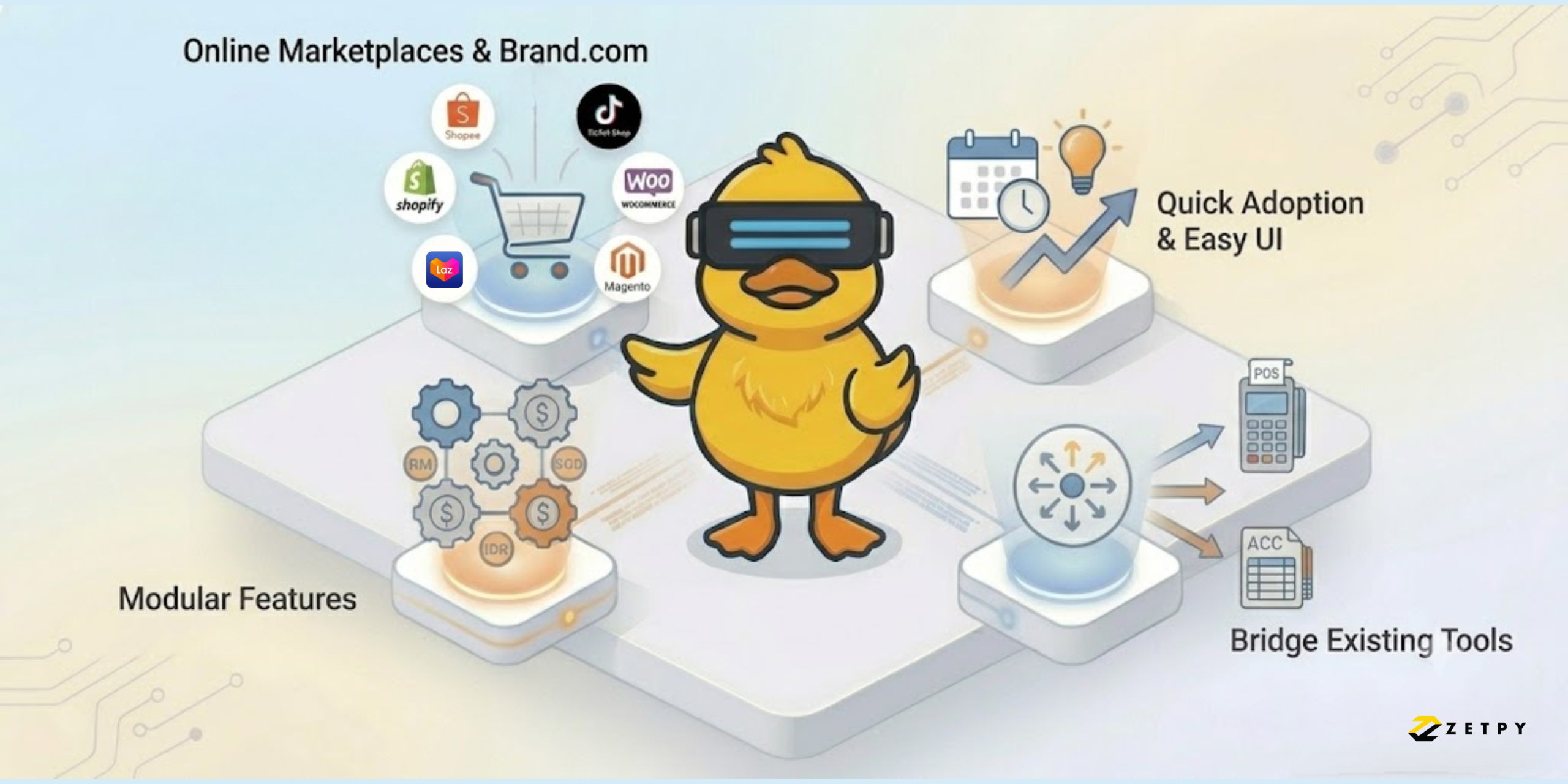
1. Acting as a Bridge for Your Existing Tools

Many software ecosystems are designed to be all-in-one solutions, which often means migrating your entire business over to their proprietary point-of-sale (POS) or accounting tools.

While that works for some, many established sellers already have existing systems they know and trust.

The Zetpy Approach: We designed our platform to act as a seamless bridge. Rather than asking you to overhaul your entire tech stack, Zetpy connects the tools you already use directly to major online marketplaces like Shopee, Lazada, and TikTok Shop. You get to keep your preferred offline systems, and we ensure everything communicates smoothly in the background.

2. Modular Features for Predictable Scaling

A common challenge with standard software pricing is the tiered structure. Often, a growing brand might need just one advanced feature, such as a specific inventory sync rule, but accessing it requires upgrading to a much higher, comprehensive subscription tier.

The Zetpy Approach: We believe your software costs should align perfectly with your actual usage. That is why we offer modular add-on features. Instead of sweeping plan upgrades, you can simply add the exact tools you need, when you need them. This keeps your operational costs predictable and ensures you are only paying for the utilities that actively drive value for your team.

3. An Interface Designed for Quick Adoption

E-commerce moves incredibly fast, and your team needs to process orders and update inventory without missing a beat. As software becomes more powerful, the user interface (UI) can sometimes become complex and difficult to navigate, making training a challenge.

The Zetpy Approach: We know that a platform is only as powerful as your team’s ability to use it. We place a massive emphasis on maintaining a clean, modern, and intuitive UI. By keeping workflows straightforward, we reduce the learning curve. New staff members can learn the ropes in a fraction of the time, allowing your team to focus on fulfilling orders rather than navigating menus.

Ready to Streamline Your Operations?

Every business has a unique workflow. The key to sustainable growth is finding a software partner that adapts to your preferred way of working, respects your budget, and simplifies your day-to-day management.

Want to see if we are the right fit for your brand? Book a personalized demo with our team today and explore how we can connect your systems and simplify your multi-channel sales.

New Lazada Malaysia Commission Rates: What You Need to Know (Effective 21 May 2026)

Attention Lazada Sellers!

As part of Lazada’s commitment to continuously improving its platform and services, there will be an update to the commission rates for both Marketplace and LazMall sellers in Malaysia. These changes will officially take effect on May 21, 2026.

At Zetpy, we want to ensure you are well-prepared for these adjustments so you can manage your margins and pricing strategies effectively.

What is Changing?

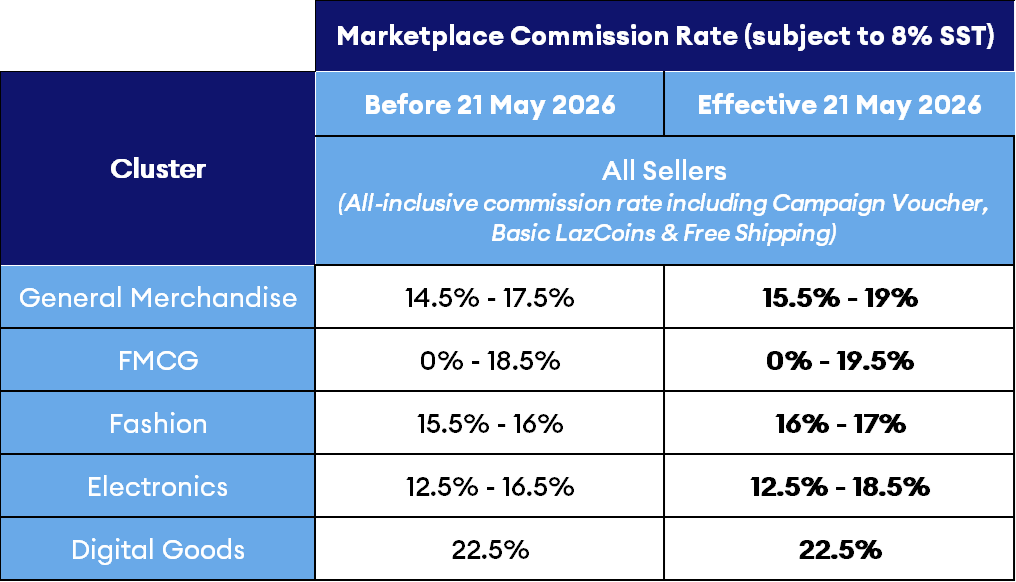
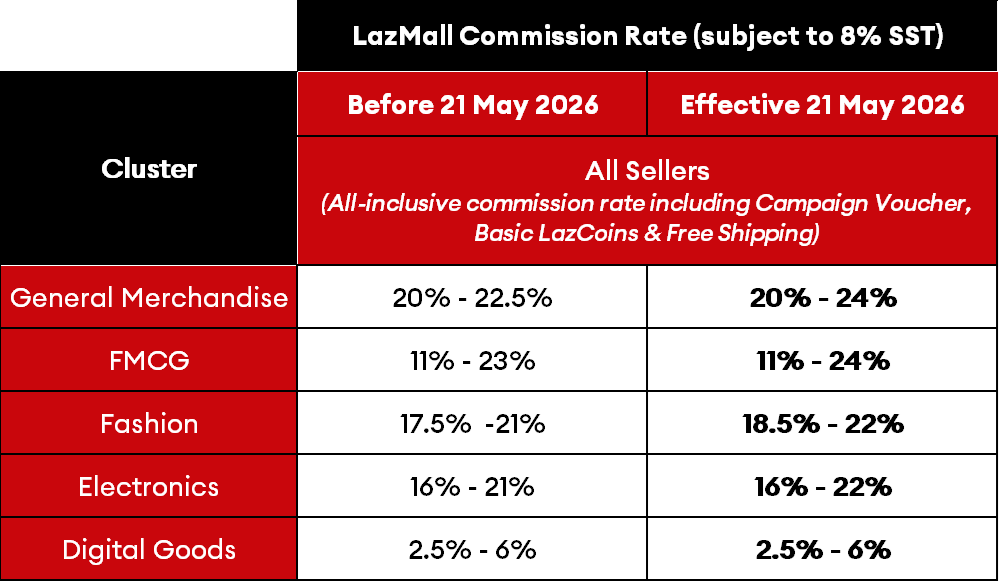
Lazada is revising its category-based commission structure. These fees are charged on the item price (minus seller-funded discounts) and are subject to the prevailing SST.

1. Marketplace Commission Rates

For general Marketplace sellers, the commission rates are being adjusted across various categories. While many categories remain competitive, some have seen an increase to better reflect the platform’s support and traffic generation.

image

2. LazMall Commission Rates

LazMall sellers, who benefit from premium placement and the “100% Authentic” branding, will also see a revision in their specific commission tiers. These rates are typically slightly higher than Marketplace rates due to the additional marketing exposure and consumer trust associated with the LazMall badge.

image

How is the Commission Calculated?

To help you budget, remember the standard formula:

Commission Fee = (Item Price – Seller Promotions) × Commission Rate (%) + SST

Note: Platform-funded vouchers (vouchers paid for by Lazada) do not reduce the item price for commission calculation purposes.

Key Takeaways for Zetpy Users:

  1. Review Your Pricing: With the new rates kicking in on May 21, now is the time to use Zetpy’s Bulk Price Update tool to ensure your margins remain healthy.

  2. Check Your Categories: Ensure your products are mapped to the correct categories. Commission rates vary significantly between “Electronics” and “Fashion” or “FMCG.”

  3. Monitor Your Settlements: After May 21, keep a close eye on your Lazada Statement of Account (SOA) to verify that the correct rates are being applied to your new orders.


For the full list of category-specific rates, please refer to the official Lazada Seller Center announcements

Why Your Own Website is the Perfect Partner to Marketplaces

For many online sellers, the journey begins on platforms like Shopee, Lazada, or TikTok Shop. These marketplaces are excellent for growth because they provide immediate traffic and a reliable infrastructure for payments and logistics.

However, the most successful sellers in 2026 are moving toward a hybrid model. This means maintaining a strong presence on popular platforms while also launching a dedicated brand website. This approach allows you to enjoy the best of both worlds without having to choose one over the other.

1. Diversifying Your Sales Channels

In any business, it is wise to avoid relying on a single source of revenue. Marketplaces are dynamic environments where rules and fees can change quickly. By having your own website, you create a secondary home for your brand. This ensures your business remains resilient if one platform experiences a shift in policy or a temporary technical issue.

2. Building Deeper Brand Loyalty

Marketplaces are designed for speed and product discovery. They are the perfect place for new customers to find you for the first time. Your own website, however, is where you can turn a one-time buyer into a lifelong fan. On your own site, you can offer exclusive loyalty rewards, share your brand story in detail, and provide a more personalized shopping experience that keeps customers coming back to you directly.

3. Full Control Over Customer Information

When you sell on a marketplace, the platform often keeps customer details private or limits how you can contact them. Having your own website changes that. You collect valuable customer information like email addresses and shopping preferences directly. This data is a goldmine for your business, as it allows you to send personalized newsletters, announce new arrivals, and run targeted promotions to people who have already shown interest in your brand.

4. A Central Hub for Professionalism

Many shoppers today use marketplaces to find products but then search for a brand’s official website to verify its legitimacy. Having a standalone storefront acts as a digital business card. It shows that your brand is established and professional. When a customer sees you have a presence on both a trusted marketplace and a high-quality website, their confidence in your products naturally increases.


Streamlining the Connection with Zetpy

The main challenge of running multiple stores is the increased workload. Managing stock levels, customer data, and processing orders across different platforms can quickly become overwhelming. This is where Zetpy comes in to bridge the gap.

Zetpy acts as a central control center that connects your marketplace accounts with your own website.

How it Works

Zetpy ensures that your expansion into a private website is smooth and efficient through several key features:

  • Synchronized Inventory: When an item sells on your website, Zetpy instantly updates the stock levels on Shopee, TikTok Shop, and Lazada. This prevents the risk of overselling and ensures your data is accurate across the board.

  • Centralized Management: Instead of logging into multiple seller centers to update a product, you can manage your listings from one place. One change in Zetpy can be pushed to your website and all your marketplace stores at once.

  • Unified Order Processing: Zetpy gathers orders from every online channel into one view. You can print shipping labels and manage fulfillment for your marketplace and website sales in a single batch, saving hours of manual work every day.

The Bottom Line

Marketplaces are a fantastic tool for reaching the masses, but your own website is the foundation for long term brand growth. By using Zetpy to link these two strategies, you can scale your business efficiently while maintaining total control over your brand’s future.

Are you looking to connect a specific platform like Shopify, WooCommerce or Magento with your online marketplace?
Book a Demo to see how Zetpy can help you today!

Scaling with the RM150M Shopee Lindung Niaga Initiative

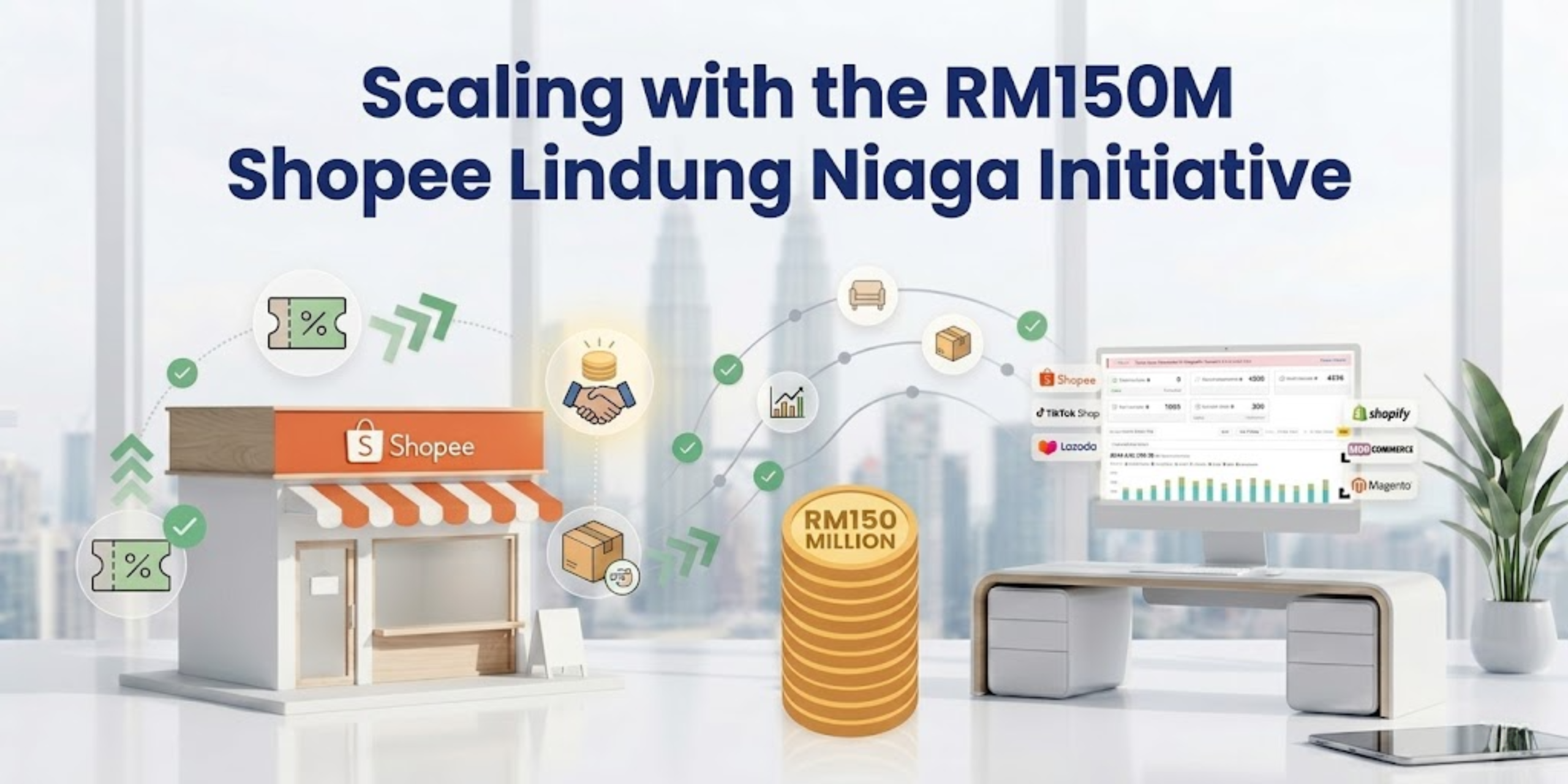
On April 29, 2026, Shopee Malaysia launched the RM150 million “Shopee Lindung Niaga” initiative, a massive support framework designed to strengthen the business resilience of local micro, small, and medium enterprises (MSMEs). This initiative reflects a strategic push to balance consumer needs with seller sustainability in an increasingly complex digital economy.

For merchants utilizing the Zetpy omnichannel platform, this program offers more than just temporary relief; it provides a structural opportunity to scale operations, optimize logistics, and improve financial liquidity while maintaining centralized control through Zetpy’s ecosystem.


The Three Strategic Pillars of Shopee Lindung Niaga

The RM150 million package is structured around three core pillars aimed at reducing operational friction and boosting sales velocity.

1. Supporting Transaction Momentum

Shopee is deploying targeted measures to ensure MSMEs maintain high conversion rates despite rising delivery costs.

  • No-Minimum-Spend Vouchers: Introduction of free shipping vouchers with no minimum spend to encourage daily purchasing.

  • Bulky & High-Value Support: Specific voucher support for categories like furniture and home appliances to offset higher shipping costs and simplify complex delivery arrangements.

2. Easing Access to Working Capital

Financial support is facilitated through Monee (formerly SeaMoney), which was rebranded in 2025 to align with market expectations.

  • SLoan for Sellers: A revolving credit facility designed to facilitate over RM5 million in financing. New users are eligible for a 100% interest rate subsidy on their first installment to support inventory restocking.

  • Quick Funds: Provides instant liquidity by allowing sellers to access earnings before the standard escrow period. New users receive 50% off Advance Fees and a 20-day free trial.


3. Strengthening Fulfillment Capabilities

Shopee is expanding its Fulfilled by Shopee (FBS) ecosystem to help sellers manage peak-period overheads.

  • Complimentary FBS Trial: Eligible sellers can access a six-month free trial of warehousing and logistics support.

    • Operational Benefits: Sellers using FBS have reported a 20% uplift in traffic and a faster delivery time (often <24 hours) with a >99% fast handover rate.


      How Sellers Can Participate in the Initiative

      Participation is segmented based on the type of support required:

      Program Participation Method Requirements
      SLoan / Quick Funds

      Activate via the “Me” tab in the Shopee App under “SLoan” or “Quick Funds”.


      Malaysian citizen/PR, 18+ years old, active Shopee seller status, and MyKad facial verification.


      FBS Trial

      Submit an FBS Interest Form through the Shopee Seller Education Hub.


      Relationship Managers contact shortlisted sellers within 2–5 working days to finalize onboarding.
      Transaction Vouchers Generally automatic for “qualifying local MSMEs” or claimable via the “Shopee Payung Lagi” microsite.

      Status as a registered Malaysian MSME on the platform.


      AI Optimiser

      Access via Seller Centre > My Products > AI Optimiser.


      Upload high-quality, clean-background images and size charts to train the AI.


      How Zetpy Complements Sellers in the Lindung Niaga Initiative

      While Shopee provides external incentives, Zetpy serves as your internal “command center,” empowering you to manage the resulting growth with maximum efficiency.

      1. High-Velocity Order Management

      With Shopee Lindung Niaga vouchers driving higher traffic, fulfillment speed is now the ultimate competitive advantage.

      • Centralized Multi-Channel Control: Manage orders from Shopee, TikTok Shop, Lazada, Shopify, WooCommerce, and Magento in one place. This eliminates the need to switch between multiple tabs and drastically reduces the risk of missing ship-out deadlines.

      • “Mix & Match” Printing: You can now print up to 50 orders of different document types – such as Air Waybills (AWB), Packing Lists, and Carrier Manifests – in a single, unified run.


      2. Inventory Resilience and Reduced Overselling

      As you scale across Shopee, TikTok Shop, Lazada, and your official Brand store, maintaining accurate stock levels during mega-sales is critical.

      • Real-Time Synchronization: Zetpy automatically deducts inventory from all connected channels the moment an order is placed on Shopee, reducing the risk of overselling by more than 90%.

      • Automated Restocking: Manage Shopee cancellation requests directly within the Zetpy dashboard. If a cancellation is approved, Zetpy automatically restocks the item across all your marketplaces, ensuring that inventory is immediately available for the next buyer.

      3. POS and Accounting Automation

      Manual data entry becomes a significant bottleneck and a source of human error when order volumes surge.

      • One-Click Financial Sync: Synchronize all marketplace and Brand.com orders into your accounting software (AutoCount, Xero, or QuickBooks Online) or POS systems (Xilnex or Zeoniq) as Sales Invoices or Sales Orders with a single click.

      • POS/Accounting as the “Inventory Master”: When your POS or accounting system is connected to Zetpy, any stock updates made in your physical store are automatically detected and reflected across all your online marketplaces within minutes.


      Conclusion: A Synergistic Path to Growth

      The RM150 million Shopee Lindung Niaga initiative is a landmark investment in the Malaysian MSME ecosystem. However, the true value for a Zetpy user lies in the synergy between Shopee and the broader omnichannel landscape. By combining Shopee’s massive traffic incentives and financial support with Zetpy’s operational speed and multi-channel automation, Malaysian sellers are better equipped to build highly efficient, resilient, and scalable digital enterprises for 2026 and beyond.

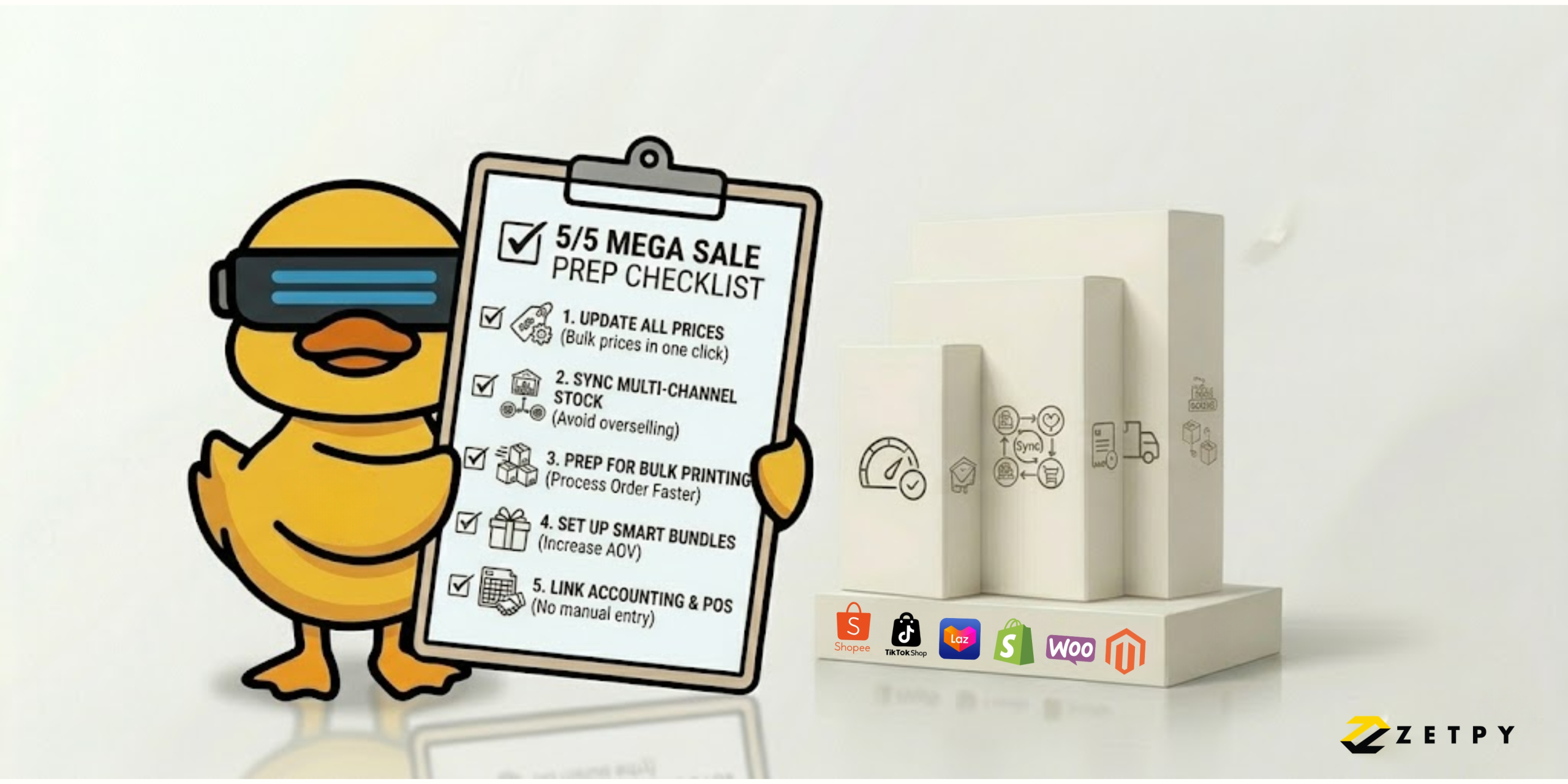
5/5 Mega Sale: The Efficiency Checklist from Zetpy

Success on 5/5 isn’t just about the discount; it’s about how well you handle the surge. Use this streamlined checklist to maximize your ROI and keep operations airtight.

1. Inventory Integrity

–  Sync All Channels: Ensure stock levels are identical across Shopee, TikTok Shop, Lazada, Shopify, WooCommerce, and Magento.

– Prevent Overselling: Let Zetpy’s Real-time Inventory Sync update all platforms the second a sale occurs. Protect your seller rating and avoid the headache of canceling orders.

2. Pricing & Promotion

– Update Product Prices: Double check and update your pricing to ensure it remains it’s competitiveness with other sellers.

– The Zetpy Shortcut: Skip the individual seller centers. Use the Zetpy’s Bulk Price Update tool within each marketplace plugin to push new prices in one click.

3. Operational Speed

– Prep for Bulk Printing: Organize your warehouse team for high-volume picking, packing and shipping.

– One-Click Processing: Process all Shopee, TikTok Shop, and Lazada orders within Zetpy. Managing everything on one screen beats jumping between multiple tabs.

4. Smart Bundling

– Boost Your AOV: Create “Buy 1 Free 1” deals or gift sets to clear slow-moving stock and increase your Average Order Value.

– Automated Logic: With Zetpy’s Bundle Feature, when a bundle sells, the individual component stock levels update instantly across all your stores. No manual math required.

5. Accounting & POS Integration

– Eliminate Manual Entry: Stop typing sales data into your books by hand.

– Auto Sync Your marketplace orders: Automatically push your 5/5 orders to AutoCount, Xero, and QBO, or your POS systems like Xilnex and Zeoniq. Stay 100% accurate without the human error.


The Zetpy Value: Why work harder when you can work smarter? Zetpy acts as your Single Source of Truth, turning a chaotic multi-channel sale into a streamlined, automated success story.

top the manual grind. Book your demo today and reclaim your time to scale.

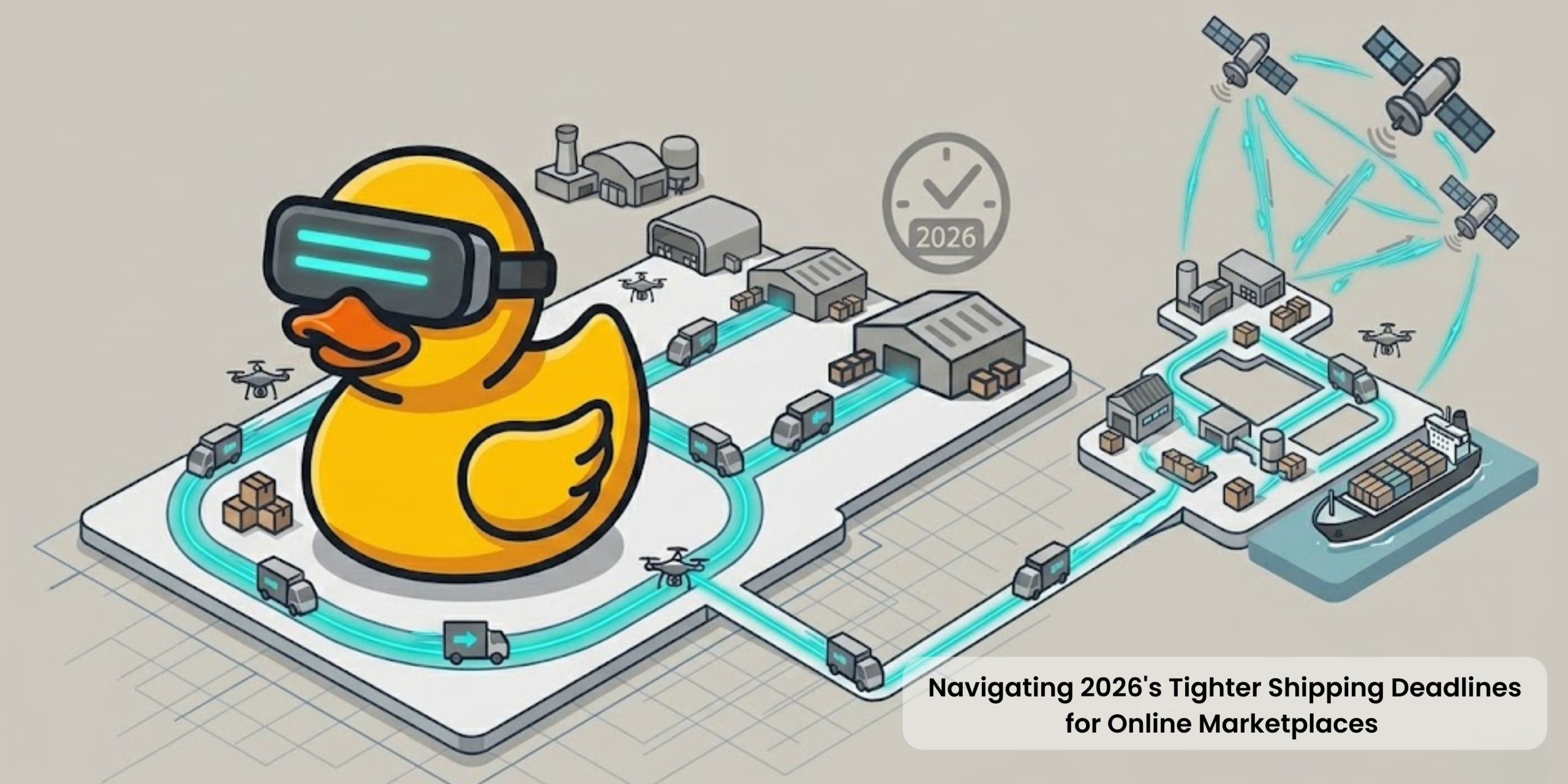
Embracing the Speed: Navigating 2026’s Tighter Shipping Deadlines for Online Marketplaces

Embracing the Speed: Navigating 2026’s Tighter Shipping Deadlines

The e-commerce landscape in 2026 has officially shifted gears. For sellers on Shopee, TikTok Shop, and Lazada, the focus has moved toward “Full-Speed Fulfillment.” While these updates reflect a global trend toward faster delivery standards, they also offer a unique opportunity for organized sellers to stand out and earn higher visibility.

Here is how you can align your operations with the latest marketplace standards without the stress.


1. Understanding the 2026 “Speed” Standards

Marketplaces have updated their policies to help sellers meet the growing consumer demand for reliability. Here’s a quick look at the current landscape in Malaysia:

  • Shopee: Saturday is now a standard fulfillment day for Shopee Mall, Preferred, and Managed sellers. This change is designed to reduce the “weekend backlog” and ensure buyers receive their Friday orders much sooner.

  • TikTok Shop: The platform now emphasizes a Fast Dispatch Rate, with a goal of having orders scanned by carriers within 48 hours. By moving toward centralized logistics, TikTok Shop helps sellers maintain a consistent shipping experience for every customer.

  • Lazada: With the Fast Fulfillment Rate (FFR) program, sellers hitting these targets often see a boost in their “Priority Delivery” status, which is a major conversion driver.


2. Best Practices for Smooth Fulfillment

Instead of seeing these deadlines as a hurdle, treat them as a framework for a more efficient warehouse.

  • Implement a Saturday “Skeleton Crew”: With Saturday now being a working day for many, a small rotating team can ensure Friday night orders are out the door by Saturday afternoon, keeping your Days to Ship (DTS) metric in the green.

  • Adopt “First-In, First-Out” (FIFO): Ensure your packing team prioritizes orders based on the time they were placed. This prevents older orders from accidentally slipping into “Late Shipment” territory.

  • Real-Time Stock Monitoring: Tighter deadlines mean less time to react to stockouts. Keeping an accurate, real-time count of your inventory is the best way to avoid the “Seller-Fault Cancellation” penalties that marketplaces monitor closely.


3. Sync Your Success with Zetpy

Managing multiple deadlines across different platforms doesn’t have to be a manual struggle. Zetpy is designed to harmonize these marketplace requirements into one clean, manageable workflow.

  • Centralized Order Management: See every order from Shopee, TikTok Shop, Lazada, Shopify, WooCommerce and Magento on a single dashboard. You no longer need to jump between tabs to see which platform’s deadline is approaching first.

  • Real-Time Inventory Sync: When you sell an item on TikTok Shop, Zetpy instantly updates your stock levels across Shopee, Lazada, Shopify, WooCommerce and Magento. This prevents overselling and protects your seller rating.

  • Bulk Processing Power: Use Zetpy’s bulk-printing tools to generate AWBs for all three marketplaces at once. What used to take hours of clicking can now be done in minutes, giving your team more time to focus on packing.

  • Seamless Data Flow: From the moment an order is placed, Automated the orders syncing with your accounting software like Autocount, Xero or Quickbooks Online or POS system like Xilnex or Zeoniq, Zetpy ensures your data moves as fast as your parcels.


The tighter deadlines of 2026 are a sign of a maturing, high-growth market. By leaning into automation and organized workflows, you can turn these requirements into a competitive advantage.

Ready to simplify your omnichannel fulfillment? Learn how Zetpy can help you master Shopee, Lazada, and TikTok Shop here.

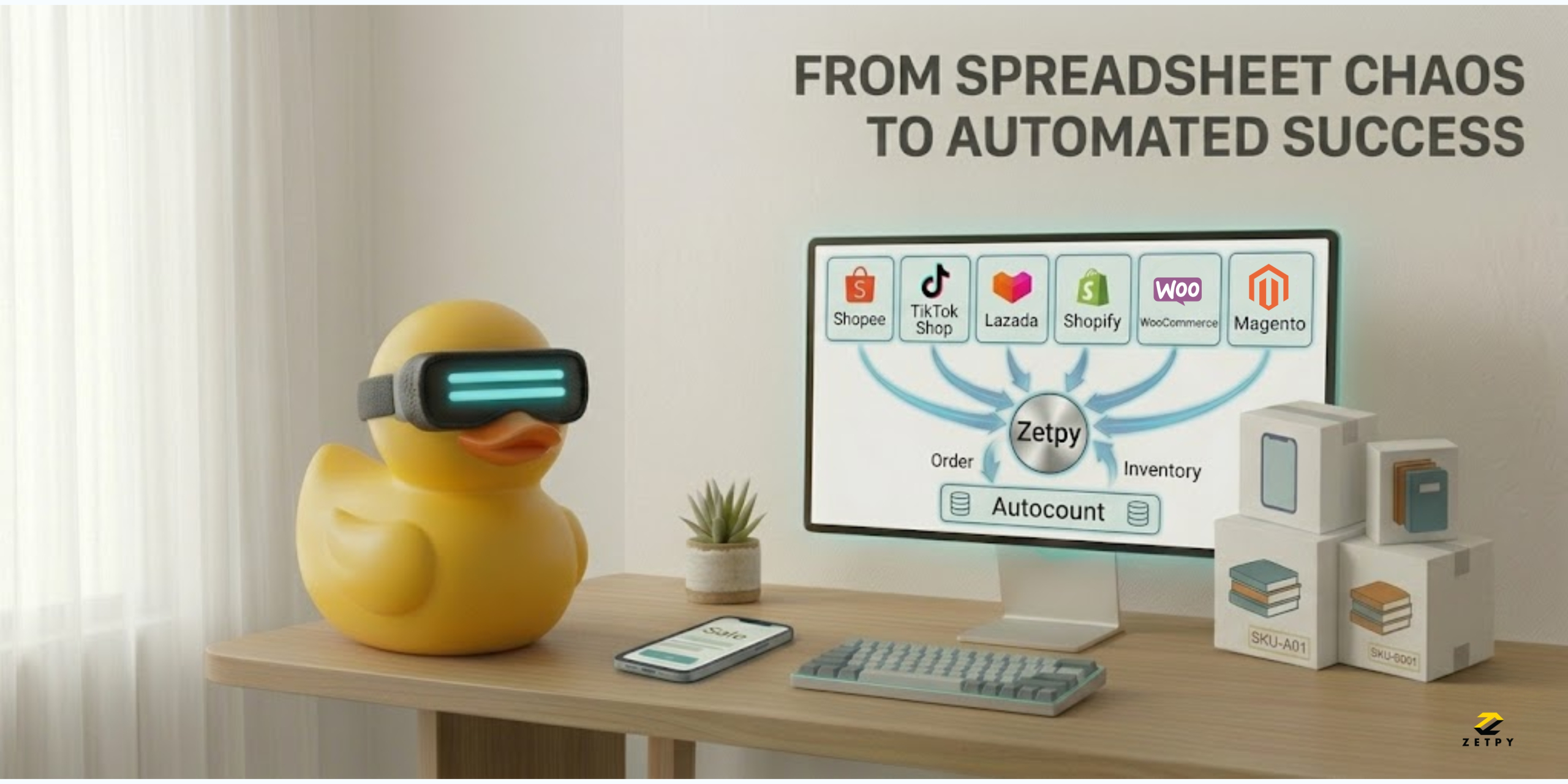
From Spreadsheet Chaos to Automated Success: The Guide for AutoCount Users

You didn’t start your business to spend your nights buried in Shopee spreadsheets or manually keying invoices into AutoCount. Yet, as a growing SME, this is often the “success tax” you pay. As orders climb across Shopee, TikTok Shop, Lazada, Shopify, WooCommerce and Magento, your team remains shackled to their desks, drowning in admin work instead of strategizing for the next big win.

Manual data entry isn’t just a time-sink; it’s a liability. Every keystroke is a potential human error that leads to messy audits, phantom stock-outs, and operational nightmares. More importantly, it drains your team’s creative energy, trading high-level growth for low-level processing. It’s time to stop surviving your sales and start scaling them.

Here is how to leverage Zetpy’s AutoCount Sync to automate your stock and order management, finally giving your business the room to breathe and grow.


1. Effortless Inventory: From AutoCount to the World

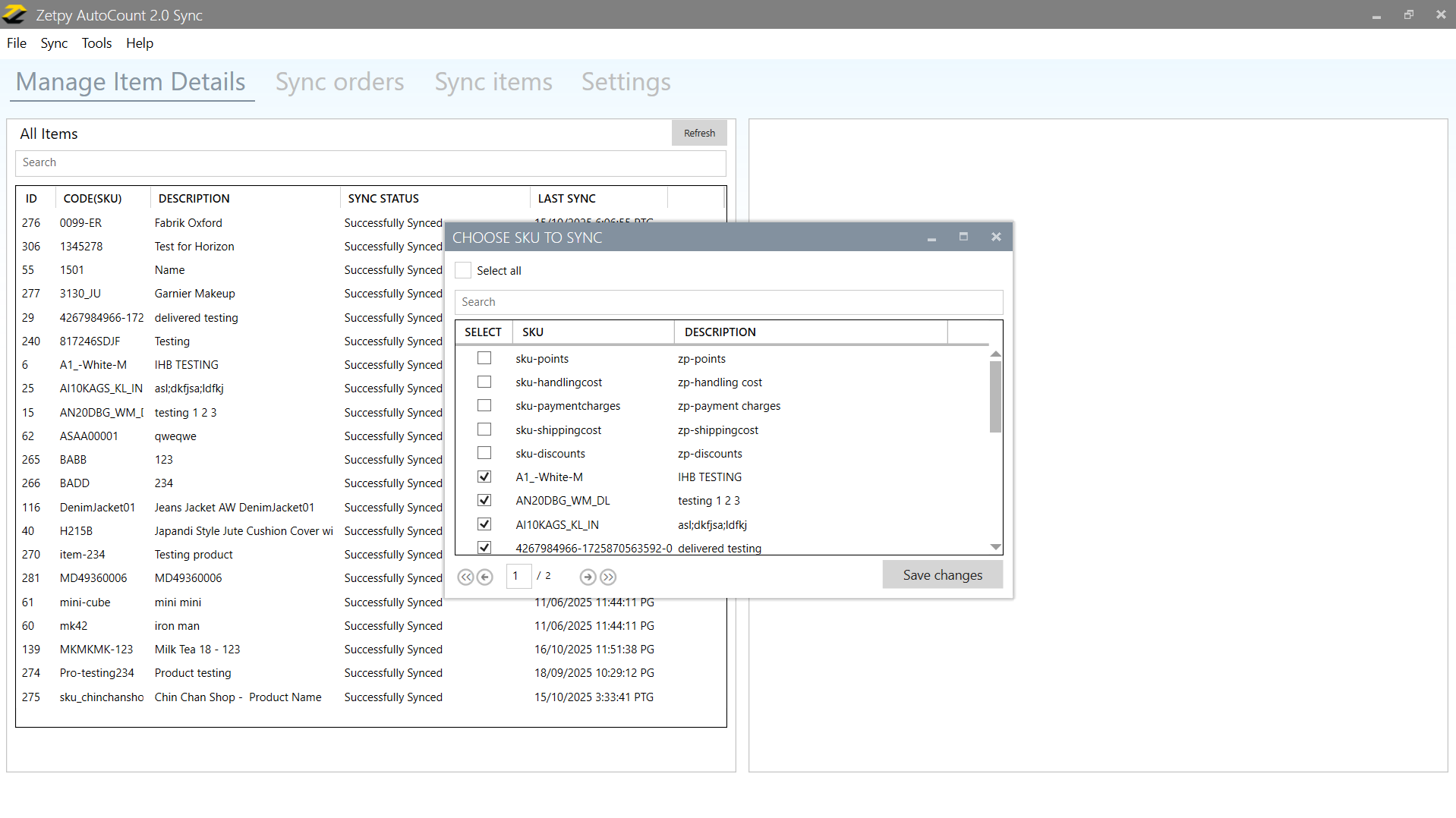
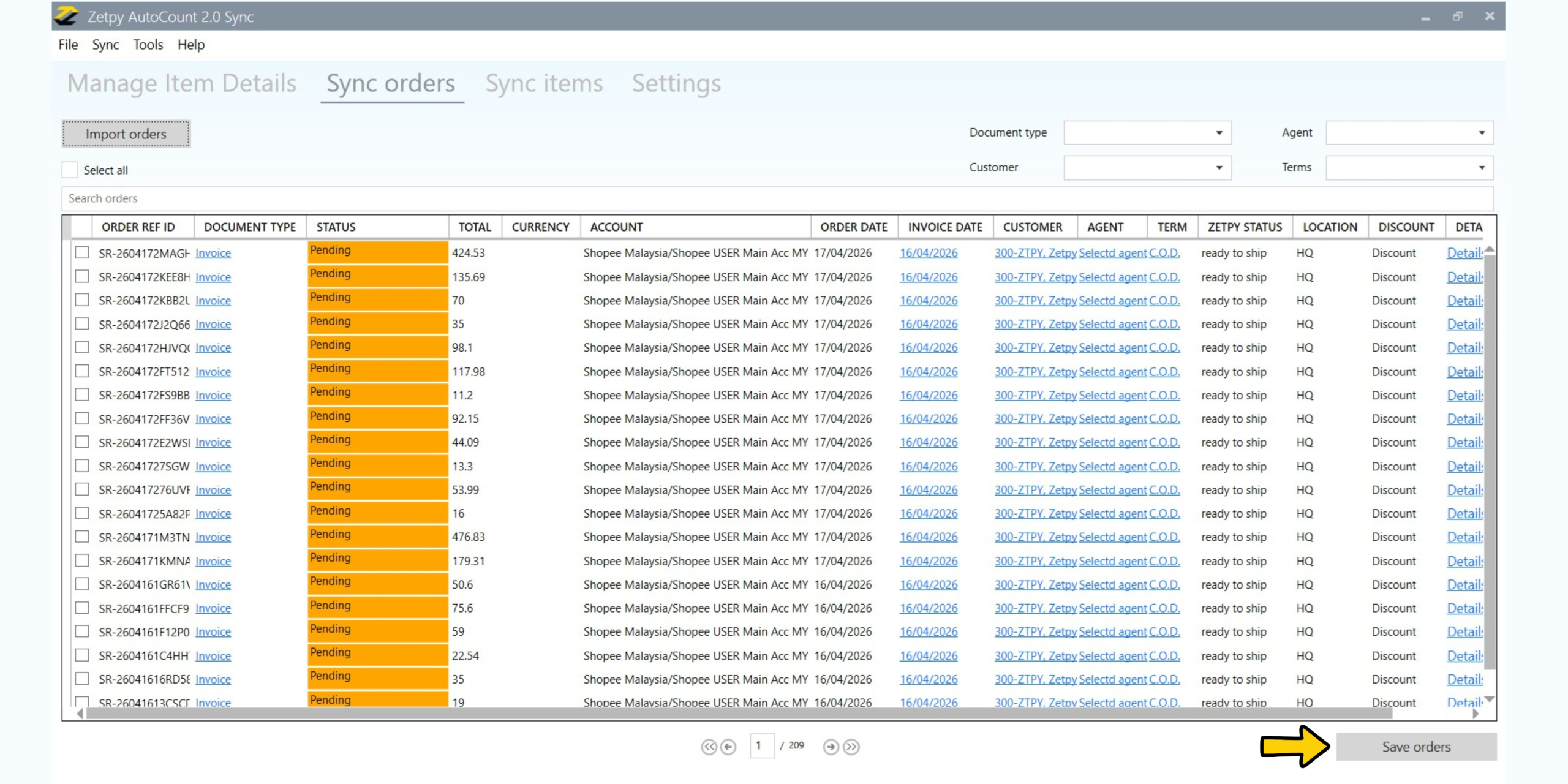
Stop managing stock platform-by-platform. Our middleware allows you to seamlessly pull your product data from AutoCount into Zetpy. Simply navigate to the Sync Item List and pick the SKUs you want to bring into the Zetpy ecosystem.

Once your items are in Zetpy, you can easily push these listings to any connected marketplace with just a few clicks.

Pro-Tip: Ensure the SKU (Stock Keeping Unit) on your online stores is identical to the Item Code in your AutoCount software.

– The Result: Whether a sale happens on Shopee, TikTok Shop, or Lazada, Zetpy identifies the SKU and instantly tells AutoCount exactly which Item Code to deduct.

By default, the stock check runs every 5 minutes, but you can easily adjust this frequency in your settings to match the pace of your business.


2. Precision Syncing: You Choose Which Orders Count

Don’t clutter your accounting with cancelled or pending orders. Zetpy gives you full control over Order Status Syncing. Most users prefer to sync only “Ready to Ship” or “Completed” orders, as this significantly reduces the risk of syncing an order that might later be cancelled.

– The Zetpy Workflow: Once your status rules are set, our middleware automatically extracts those specific order details and pushes them into AutoCount.

– The Result: Sales Invoices are generated automatically. Your admin staff graduates from “data typists” to “growth managers,” giving your team the mental space to focus on your next big business goal.


3. Say Goodbye to Manual Entry: One Click or Zero Clicks

Still typing orders one by one? Those days are over. With our middleware, you can pull orders from all connected marketplaces and webstores into AutoCount instantly.

Choose your speed:

– The One Click: Sync everything across all platforms with a single button.

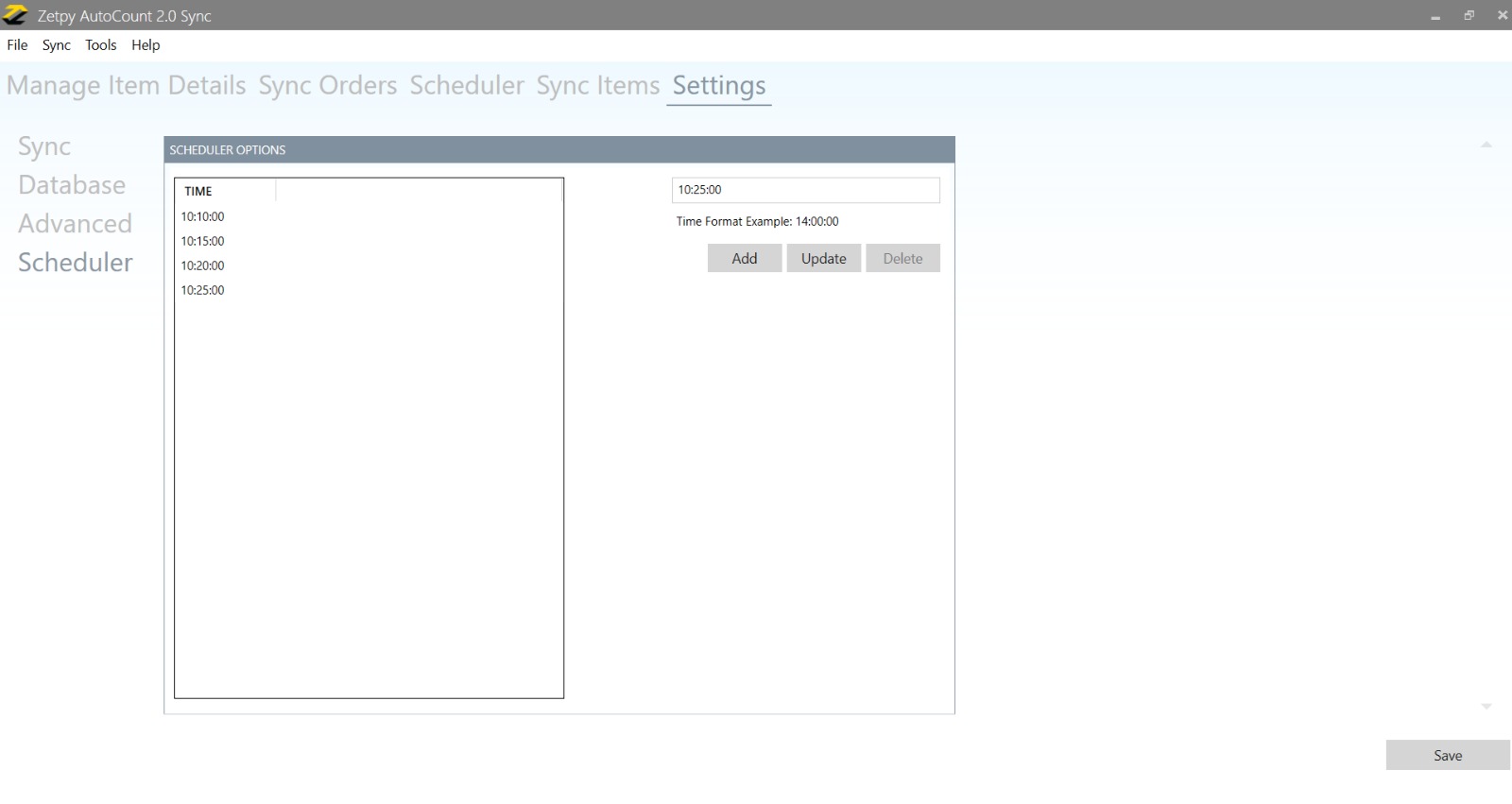
– The Set-and-Autorun: Use our Customized Scheduler to automate the process entirely.


The Zetpy Advantage for AutoCount Users

Zetpy AutoCount Sync isn’t just a generic tool; it’s built for the specific way Malaysian SMEs operate. We understand that every business is unique. If you have specialized requirements or a specific workflow, feel free to contact us; we are always ready to help tailor the solution to your needs.

Stop managing spreadsheets and start managing your business.

Ready to see it in action? Book a 1-on-1 Demo 

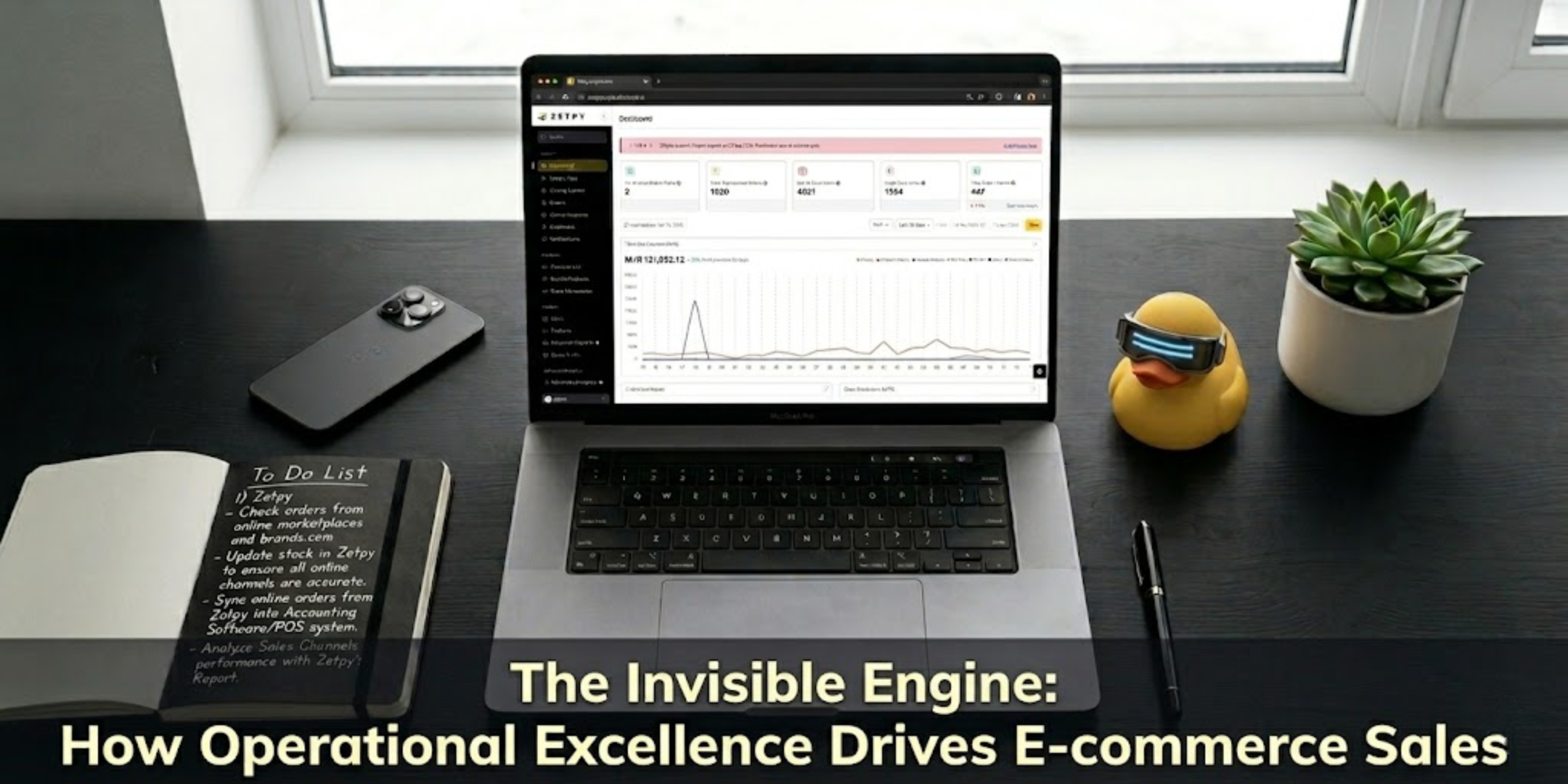
The Invisible Engine: How Operational Excellence Drives E-commerce Sales

Success in a multi-channel landscape is determined long before a customer reaches the checkout page. While many focus on capturing attention, the most resilient brands focus on operational excellence. When you sell across various platforms, retaining a customer is just as critical as attracting one. Consistency across every touchpoint of your listing signals that your brand is in control. This removes the hesitation that often causes buyers to walk away and replaces it with the confidence to buy.

Building a frictionless path to purchase depends on how effectively you manage the following operational pillars.

1. Preventing Order Cancellations with Automated Inventory

There is no faster way to lose a customer’s trust than cancelling the order after customer already made payment. When business sellers sell manually across multiple platforms, a “buffer” of stock is often left as a safety net. However, this actually limits your sales potential.

A truly synchronized inventory system acts as a silent salesperson by automatically updating all your online channels and physical stores the moment a sale happens. Because your stock levels are reflected in real-time everywhere, you can confidently list every single unit you have without fear. This allows you to sell through your entire inventory efficiently, ensuring no products are left sitting on the shelf as wasted buffer.

2. The Power of “Unified Information”

Customers today are cross-platform researchers. They might discover your brand on your website but prefer to check out on online marketplace to use their vouchers. If they find different product specs, varying images, or conflicting descriptions, it makes your listings harder to find and sets off an internal “risk alarm.”

Consistency across every touchpoint signals that your brand is professional and in control. When your descriptions and technical details are identical everywhere, you remove the confusion that causes customers to hesitate, making it much easier for them to move forward with the purchase.

3. Building Trust Through Fulfillment Speed

A customer’s journey often stops at your store ratings. Before they buy, they look at your reviews to see if other people are happy. One of the best things a customer can read about you is: “Seller ships out the item very fast.”

If your business systems are not connected, your speed will suffer. However, when all your orders flow into one single dashboard that connects to your warehouse and accounting teams, you can process orders much quicker.

In e-commerce, speed is a sign of quality. A store that ships within hours of an order being placed is a store that builds trust and gets “favorited” for future purchases.


Efficiency is the Key to Growth

In a competitive landscape, the most successful stores are the ones that run the most efficiently. When your inventory is accurate, your information is consistent, and your shipping is fast, you create a professional experience that keeps customers coming back.

Zetpy makes this possible by acting as the bridge of your business. We sync your product, inventory across all online channels automatically, ensuring your operations never miss a beat. Stop fighting with manual updates and start growing your business with a system built for speed.

Arrange a Free Demo today to see how we can simplify your multi-channel operations.

The SKU Blueprint: A Guide to Scalable E-Commerce

In e-commerce, successful brands focus on one small but mighty detail: the SKU. A Stock Keeping Unit is your business’s DNA. Without a clean system, growth is chaotic; with one, your business becomes a professional, streamlined machine.

Phase 1: Building Your Manual Foundation

1. Design Your Internal Language

Unlike a global barcode, an SKU is your internal code. Manually creating a logical format (EG: BRAND-CAT-COL-SIZE) stops you from just selling “items” and starts you managing “data.”

Pro Tip: Don’t add spaces in your SKU. Some systems cannot recognize spaces, which causes errors. Stick to alphanumeric characters (letters and numbers) and hyphens (-) for the most reliable results. 

2. Aligning Your Store and Marketplace (POS)

If you run a physical retail shop alongside your Shopee or TikTok Shop, using the exact same SKU across your POS (like Xilnex or Zeoniq) and online stores creates a vital manual bridge.

How it benefits your business? When an online sale happens, you know exactly which SKU to search for and deduct from your retail stock. No more guessing which “Red Shirt” sold; you have a clear SKU to look up, saving you time while reducing potential human errors.

3. Matching Your Paperwork (Accounting)

The same logic applies to your finances. Using identical SKUs for your online listings and your inventory in AutoCount, Xero, or QuickBooks makes bookkeeping significantly faster.

Why so? When selling online, creating manual invoices is easier. Just copy the SKU, and your software pulls up the correct price and tax instantly, reducing data entry errors.

4. Precision in Fulfillment

You can’t rely on memory to run a business. Manually organizing your warehouse or storage space by SKU reduces “human error.” Your team knows exactly which stock to pack based on the SKU, preventing the nightmare of sending a “Red Medium” when the customer ordered a “Blue Large.”


Phase 2: The Automation Leap

1. Zetpy: Your Central Command

After establishing your SKU foundation, manual updates eventually hit a ceiling. Typing invoices and searching for SKUs to deduct stock by hand takes hours. Zetpy removes this burden by using your SKU architecture to automate the heavy lifting:

– Automated Stock Sync: When a TikTok Shop order arrives, Zetpy recognizes the SKU and instantly updates stock on Shopee, TikTok Shop, and your POS system. No more manual searching or typing. More importantly, it reduces the risk of overselling – a major headache for businesses selling on multiple platforms.

– One-Click Bookkeeping: With just a simple click, Zetpy pushes orders directly to your accounting software – generating invoices, recording sales, and telling your software exactly which SKU needs to be deducted.

– Focus on What Matters: You move from “doing the work” to “overseeing the system.” Instead of wasting hours on tedious manual updates, you can spend your time where it matters


Summary

A professional business starts with a commitment to clean data. By combining a solid SKU foundation with Zetpy’s automation, you stop firefighting inventory issues and start focusing on actual growth.