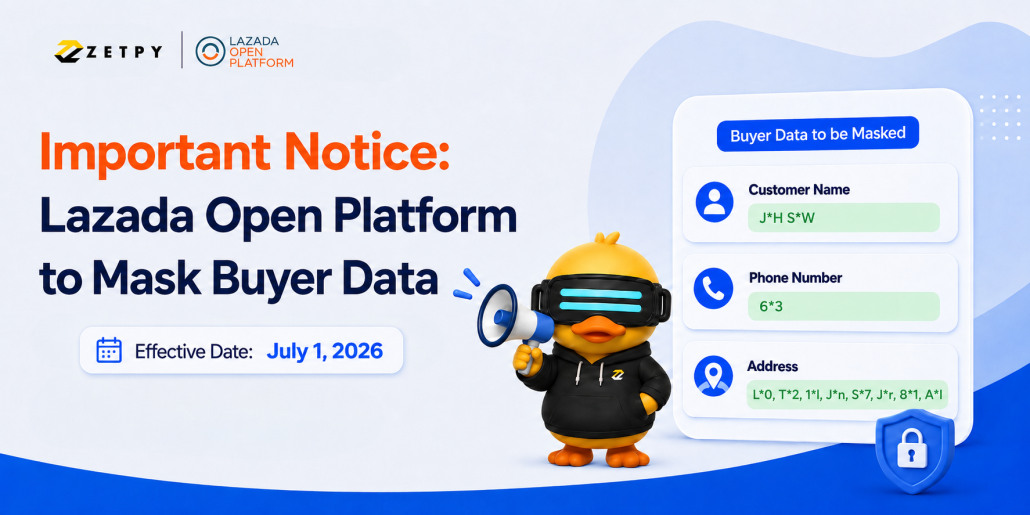
Important Notice: Lazada Open Platform to Mask Buyer Data Starting July 1, 2026
Lazada Open Platform - Customer Details Masking

At Zetpy, we prioritize keeping your e-commerce operations secure, compliant, and ahead of industry changes. We want to update you on an upcoming shift regarding data security and user privacy from one of our major marketplace partners – Lazada.

Starting July 1, 2026, the Lazada Open Platform will officially begin encrypting and masking buyer personal information within order data retrieved through its APIs.

This data privacy measure aligns Lazada with a broader global e-commerce movement toward tighter consumer data security. To help you prepare, here is everything you need to know about the update and how it impacts your operations on Zetpy.

What is PII and Why Is This Happening?

In the e-commerce and technology sectors, customer details like names, phone numbers, and addresses are classified as Personally Identifiable Information (PII). PII refers to any data that can independently or collectively trace and identify a specific individual.

Regulatory standards around data compliance have tightened significantly. Marketplaces are progressively moving away from exposing open customer text fields to protect consumers from potential data breaches and scam vulnerabilities.

This is a well-established pattern across the e-commerce industry:

  1. Shopee pioneered this shift regionally in August 2021 by launching its own open platform buyer info masking strategy.
  2. Shopify introduced strict access governance, restricting basic or starter plan merchants from accessing “Custom Level 2 PII” via standard apps.

Lazada’s update represents the next step in this industry-wide commitment to digital ecosystem security.

Frequently Asked Questions (FAQs)


1. What specific details will be affected?

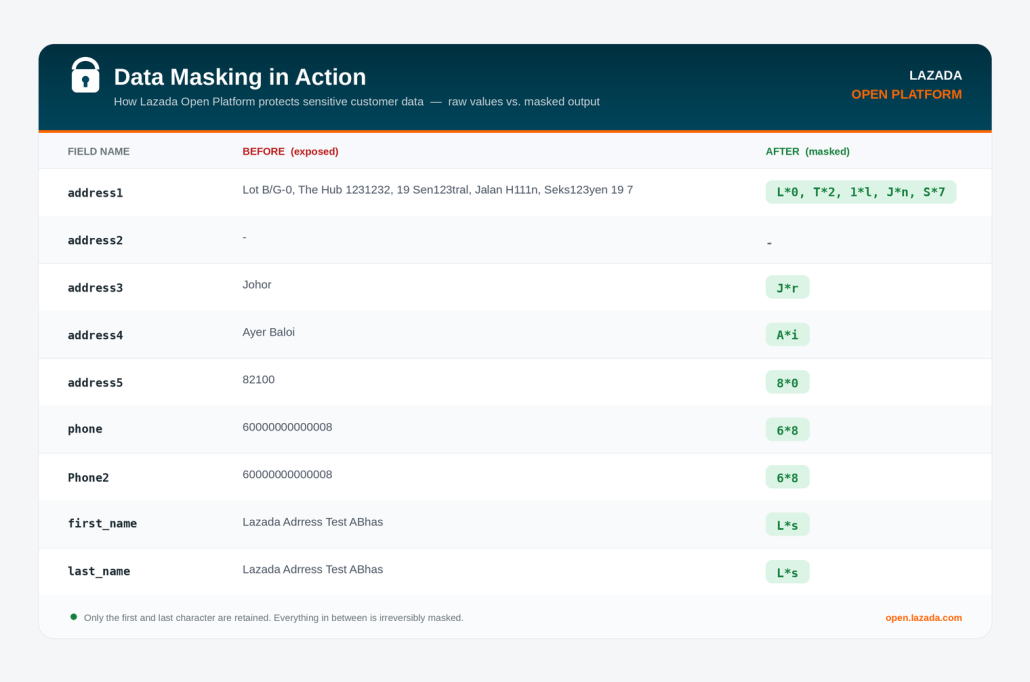
Starting July 1, 2026, you will no longer receive full, unmasked customer records via the Lazada Open Platform API. The changes primarily affect:

  • Buyer Name (First and Last name will contain asterisks, e.g., J***s)

  • Phone Number (Hidden except for the final digits)

  • Delivery Address (Formatted or masked to preserve individual anonymity)

Below is one example given by Lazada
Lazada Open Platform - API - Customer Details Masking

Lazada Open Platform – API – Customer Details Masking


2. Do I need to perform any action or updates in Zetpy?

No. There is no manual action required on your part. The Zetpy engineering team is managing the infrastructure update on our backend to ensure a stable integration with Lazada’s updated API protocols.
However, you will notice that new Lazada order records synced to the Zetpy Inventory Platform will reflect this masked format. This is normal behavior and means your store is fully compliant with Lazada’s data protection policy.

3. Are there any exceptions to this rule?

Yes. Lazada provides exceptions for merchants operating under the Delivery by Seller (DBS) model—formerly known as Seller Own Fleet (SOF).

If you fulfill orders via your own logistics networks (common for large or bulky items like furniture and major appliances), you can apply for a data unmasking exemption directly through the Lazada Open Platform. Lazada understands that local dispatch teams require raw address and contact names to successfully complete independent fulfillment.

Looking Ahead

While adjusting to masked buyer data can feel like a shift in your usual order-matching routine, it represents a healthier, more secure foundation for online retail. Rest assured that Zetpy continues to fully sync your inventory, product details, and core order management workflows smoothly across all marketplaces.

If you have any further questions or require assistance checking your DBS status, please reach out to our Zetpy Support Team. We are here to navigate this transition together.

Official References for Further Reading:


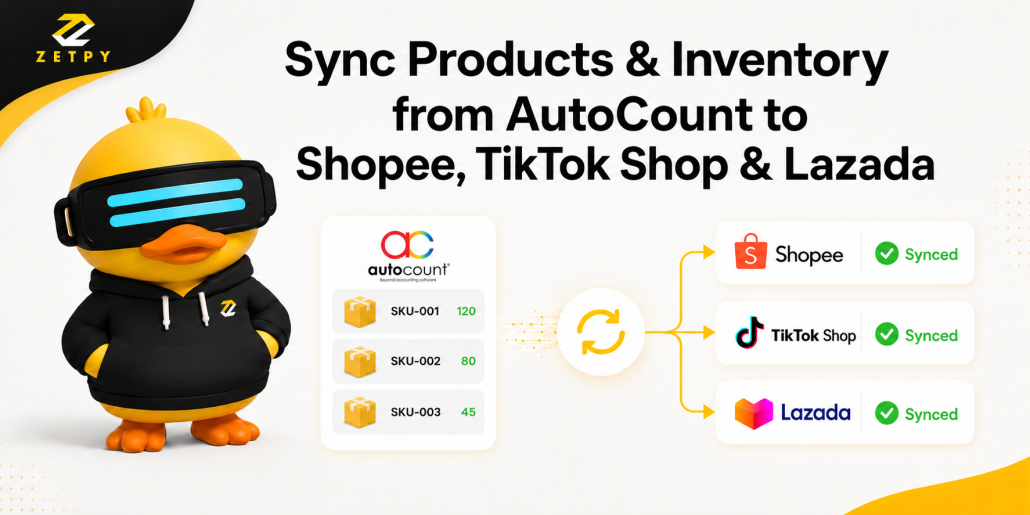
Sync Products & Inventory from AutoCount to Shopee, TikTok Shop & Lazada

Managing an e-commerce business gets complicated fast when you sell across multiple channels like Shopee, TikTok Shop, Lazada, Shopify, WooCommerce and Magento. If you use AutoCount as your Product and Inventory master, you might find yourself constantly logging in and out of different platforms just to copy and paste product details for new listings or update inventory counts manually. This normally takes hours, and it opens the door to costly typing mistakes and overselling.

That is exactly why Zetpy AutoCount Sync is a game-changer. With this integration, you can connect your AutoCount product and inventory data directly to your online marketplaces via Zetpy. By using a specialized Zetpy AutoCount Sync middleware, you can sync product and inventory into Zetpy with ease so that can sell it on your connected online marketplaces.

Here is a quick look at how the Zetpy AutoCount sync middleware makes it simple to control your products and stock numbers without manual work headaches.

1. Select and Sync Items in Just a Few Clicks

You do not have to push your entire backend warehouse inventory to your online stores if you do not want to. The Zetpy middleware gives you total control over what you sell online through a very clean setup.

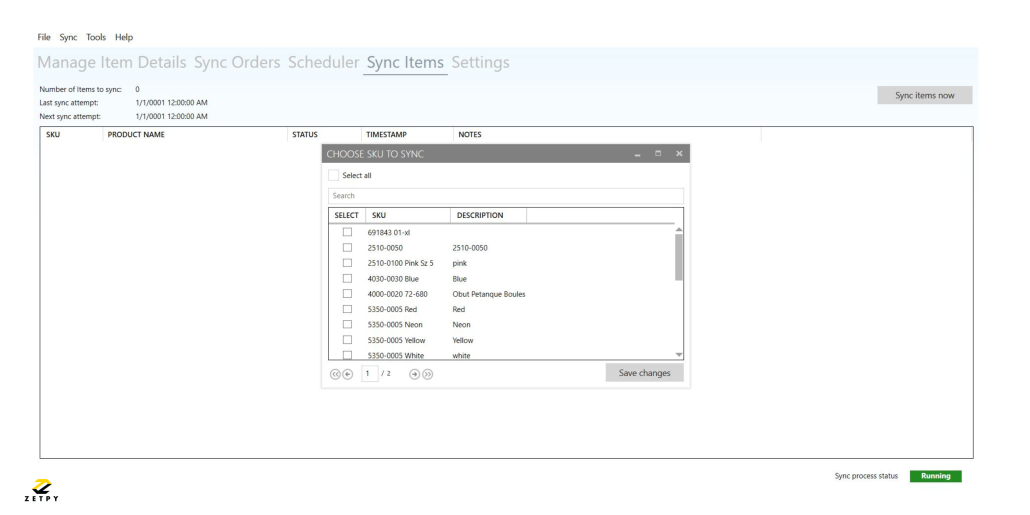
Inside the middleware, you can open your Choose SKU to Sync List. From this view, you simply tick the boxes next to the specific items you want to sell. Once ticked, the system sync those product details from Autocount such as Product Name, SKU and inventory count straight into Zetpy. From there, you can updated the product details once in Zetpy and they will ready to be published across your Shopee, TikTok Shop, Lazada, Shopify, WooCommerce and Magento. It keeps your product details accurate and saves your team from hours of repetitive manual works.

2. Set Your Automated Inventory Update Time

The biggest risk of selling on multiple platforms at the same time is selling stock you do not actually have. If you sell your last unit on Shopee at 2:00 PM, but TikTok Shop or Lazada does not know about it, a customer on another platform could buy the same item minutes later. This leads to cancelled orders, unhappy buyers, and seller penalties.

To prevent this, our system features a automated inventory update timer:

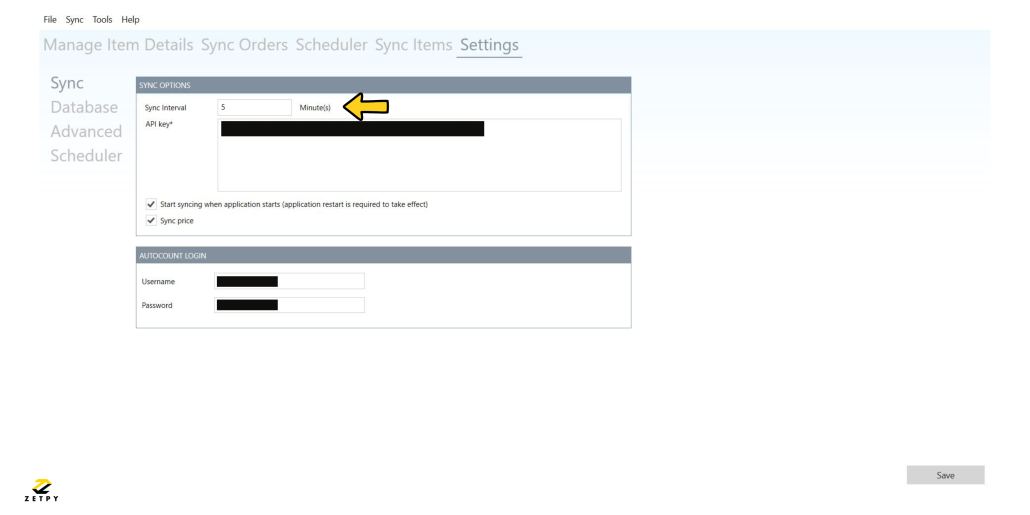
  • The 5-Minute Standard: By default, the system is set to a stock sync interval time of 5 minutes. Every five minutes, it automatically reads your AutoCount inventory numbers and updates your online stock levels if there are any stock changes in your Autocount.

  • Flexible Control: If your sales volume changes or you run a massive campaign, you can easily amend this interval time inside the settings to increase the sync interval.

3. Instantly Push Urgent Stock Updates

What happens if you just received a fresh batch of hot-selling items at your physical warehouse, and customers are waiting online right now? You do not need to wait for the next 5-minute automated cycle to run.

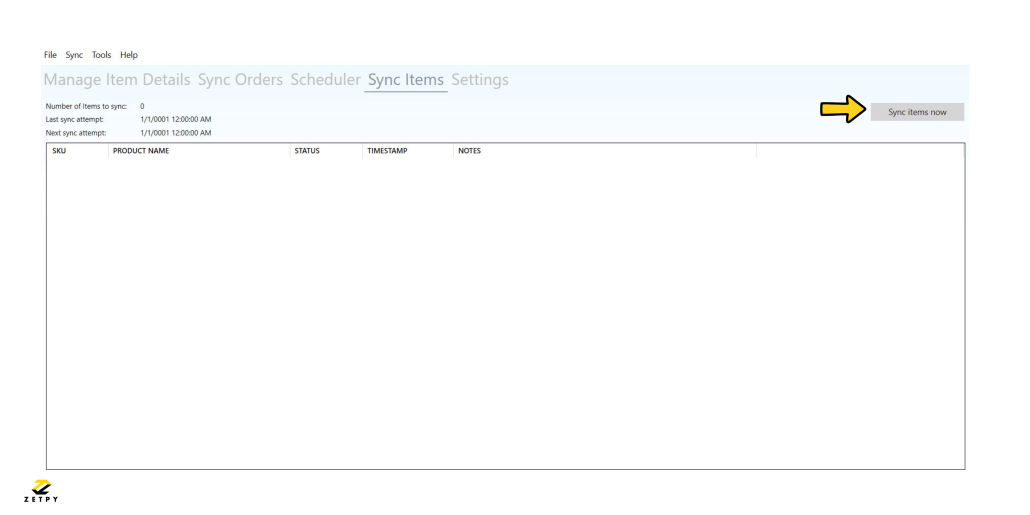
The middleware features a dedicated Sync Stock button. Clicking this button triggers an immediate inventory update. It pushes your absolute latest inventory counts out to Zetpy and all your marketplaces in real-time. It is the perfect tool to update inventory for flash sales or sudden restocks.

Streamline Your Online Sales Today

Stop wasting hours on manual inventory tracking and protect your seller ratings from accidental overselling on Shopee, TikTok Shop and Lazada. See how easy it is to link your Autocount to your online storefronts with the Zetpy AutoCount Sync.

Ready to see it in action? Book a Demo with Our Experts Today and let us help you automate your e-commerce operations.

Beyond the Search Bar: What Shopee’s ChatGPT Integration Means for Brands

Imagine needing quick shopping advice, such as styling an outfit, picking a unique gift, or choosing the right camping gear.

Normally, you would open an e-commerce marketplace app like Shopee or Lazada, type keywords into the search bar, and dig through sponsored ads and pages of listing. But a new alternative is emerging. Shopee’s integration inside ChatGPT lets users skip the search bar entirely and find products through a normal chat. Users simply link their Shopee accounts inside ChatGPT and start chatting.

For brands, this is more than just a cool frontend gimmick. It introduces a new layer of friction to backend operations because the entire experience relies on one critical factor: Real-Time Inventory Sync.

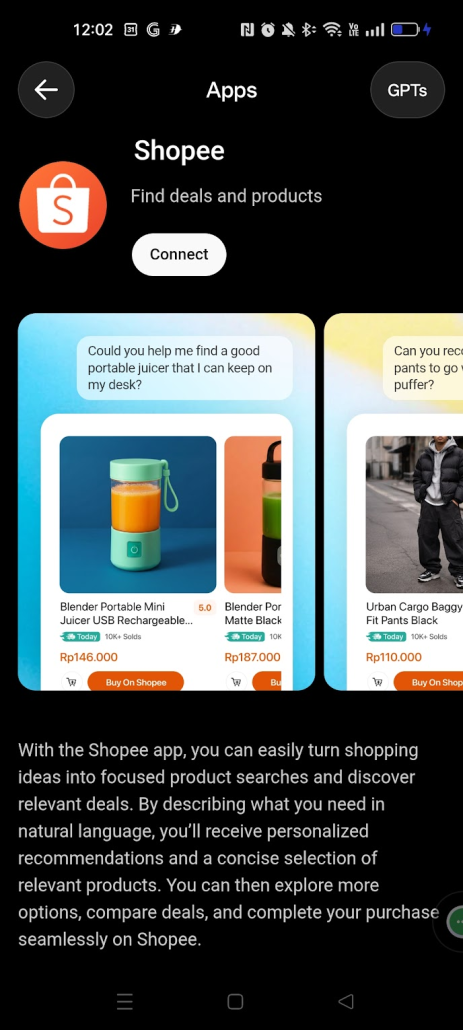
Open ChatGPT – Click on Top Left Menu, Select Apps. Search for “Shopee” 


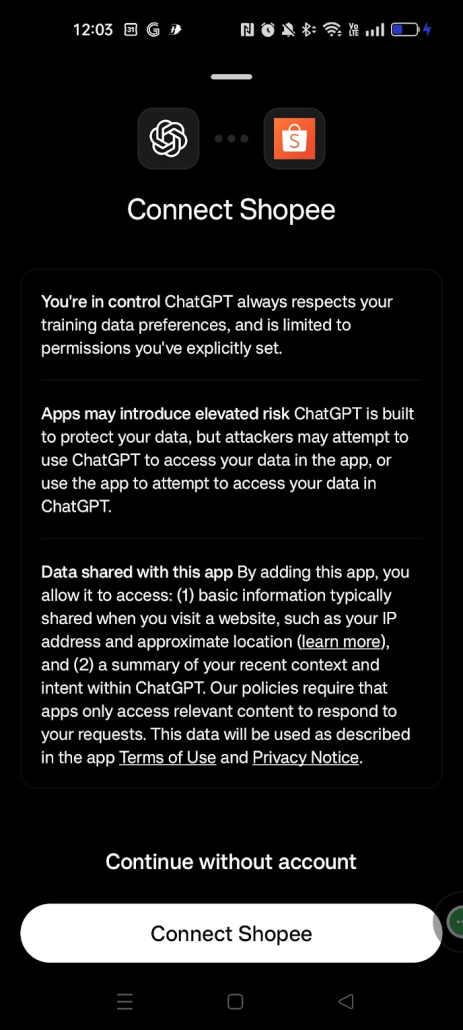
Authorize the integration and sign in using your existing Shopee account

Live Data vs. Dead Links

For conversational search to work, ChatGPT cannot rely on scraped web data. It must pull live data directly from active merchant’s real time inventory. When a user types a prompt, the AI reads their intent and drops a list of clickable product recommendations, though our early testing did show some latency.

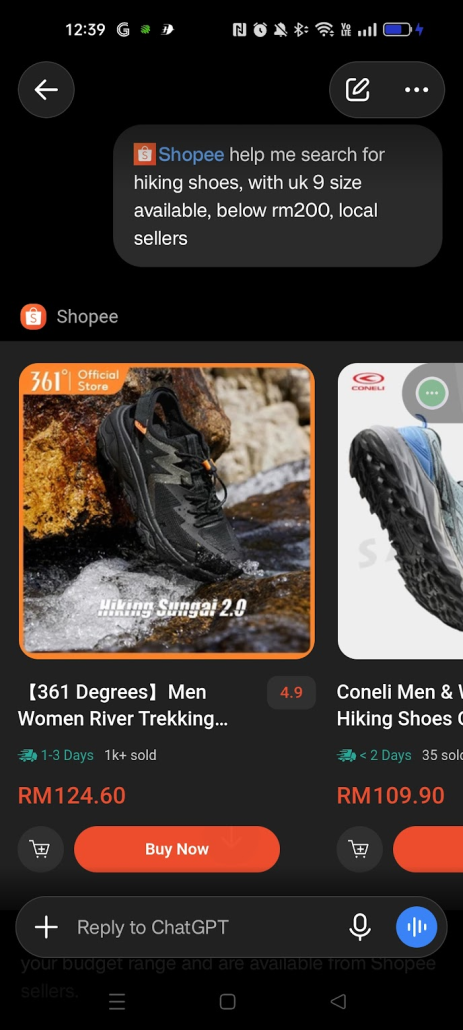
We tested this with a specific query: “Help me search for hiking shoes, with UK 9 size available, below RM200, local sellers.”

ChatGPT successfully recommended a list of budget-friendly pair of trail shoes. I picked the one from 361 (which is an enterprise brand that uses Zetpy to keep its inventory synced real-time across channels). The AI verified that the exact SKU was available in the right size at the right price. Clicking the link instantly opens the Shopee mobile app to let the user buy.


Typed “Help me search for hiking shoes, with UK 9 size available, below RM200, local sellers”
Chatgpt
recommends me a pair of good looking shoes from 361 with stock
(Note: 361 is a customer of Zetpy Inventory)


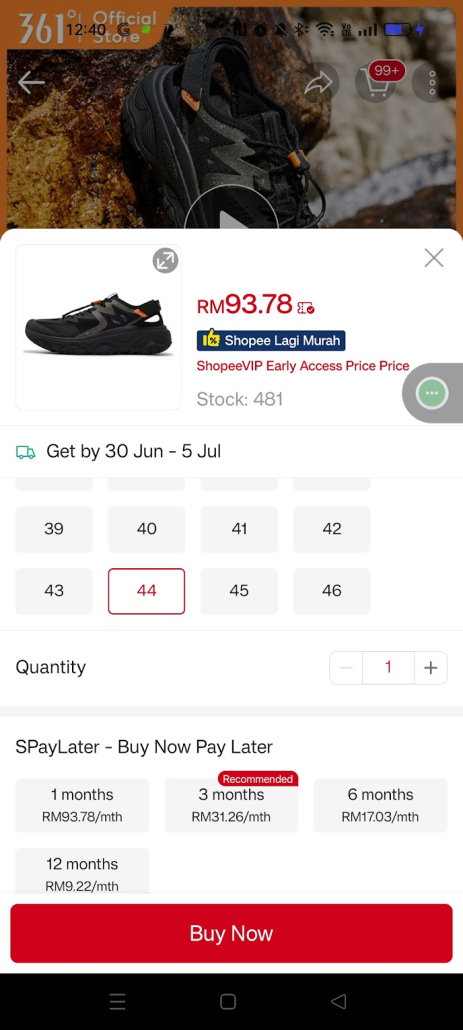
Click on the link will bring you to Shopee Mobile App,
continue the selection of size, payment options and complete the purchase.

Shopee’s Walled Garden

Shopee is the first major marketplace in Southeast Asia to deploy this, launching across eight countries: Malaysia, Singapore, Philippines, Thailand, Indonesia, Vietnam, Taiwan, and Brazil.

But notice what this integration is not. It is not OpenAI’s Instant Checkout; you cannot checkout and pay natively inside ChatGPT.

Instead, all the product recommendations will lead to its own mobile app, where Shopee still controls the customer experience and transaction powered by their ever popular SPayLater – arguably the largest digital micro-loan and Buy Now, Pay Later (BNPL) providers in Southeast Asia (SEA).

The Bottom Line for Multi-Channel Merchants

As conversational AI begins to share the stage with the traditional search bar, your backend operations face a new reality.

Your product data (P) must be highly structured so an AI can accurately read and match it, and your inventory (I) updates must be instantaneous. If an AI recommendation triggers a sudden spike in buyers, your stock levels across Shopee, Lazada, and TikTok Shop need to adjust in real time to prevent overselling, underselling, and platform penalties.

The front end of retail is becoming a conversation, but you can only win if your backend data is perfectly synchronized.

Shopee Direct Shop Guide: Grow Cross-Border Sales Easily

Every growing e-commerce seller eventually asks the same question: How do I expand my business overseas without breaking the bank on international warehouses and complex logistics?

If you are a Malaysian seller looking to grow, the Shopee Direct Programme is your golden ticket. It allows local businesses to sell directly to eager buyers in Singapore, Thailand, and the Philippines.

But what exactly is a Shopee Direct Programme, how do you unlock it, and what is the hidden challenge that standard software tools fail to tell you? Let’s dive into the details.

What is Shopee Direct Programme?

The Shopee Direct Programme is a cross-border selling feature that lets local Malaysian sellers open and operate independent storefronts in neighboring countries.

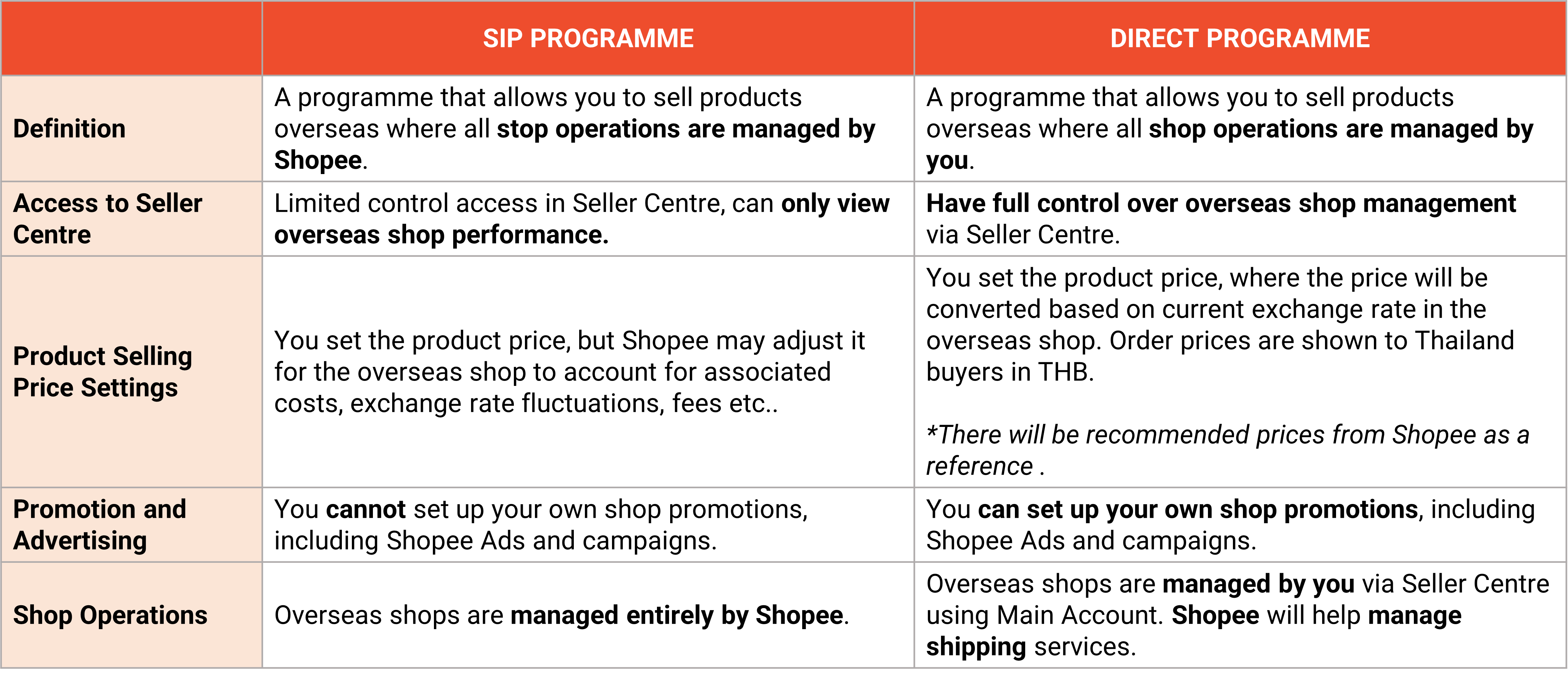
Unlike the older Shopee International Platform (SIP) where Shopee completely manages your international store, pricing, and operations, a Shopee Direct Shop gives you full ownership. You control your pricing strategies, join local flash sales and run targeted marketing campaigns. Shopee simply handles the cross-border shipping and payment collection.

How does joining Shopee Direct Programme benefits your business?

Expanding your reach through this programme offers distinct advantages for your brand’s growth:

  1. Hassle-Free Cross-Border Logistics: When an international order comes in, you simply pack it like a local order and drop it off at a local Shopee warehouse hub. Shopee takes care of the international freight , You just need to sell as normal.
  2. Attractive Initial Incentives: New sellers frequently enjoy a 0% commission fee waiver for the first 3 months, alongside complimentary flash sale slots to jumpstart international traffic.
  3. Unified Overseas Shop Management: Thanks to recent Shopee updates, you can manage your local and overseas shops within a single portal using one main account login. No need login multiple accounts.


How to Apply and Criteria to Join the Shopee Direct Program

Opening an international storefront is straightforward, but your store must meet specific rules to get approved.

Requirements to Qualify

Before you apply, make sure your store hits all of these targets:

  1. Active Order History: You must have at least one completed local order delivered within 30 days of your submission date.

  2. Established Account: Your store must be validly registered on Shopee Malaysia for at least 30 days before applying.

  3. Shipping Setup: You must have Shopee Supported Logistics turned on for pickup or drop-off services.

  4. Policy Compliance: You must agree to follow all guidelines, policies, and seller hub rules for both Shopee Malaysia and the overseas platforms  (Shopee Singapore, Philippines and Thailand).

Step-by-Step Application Process

Once you match the checklist above, follow these steps to launch:

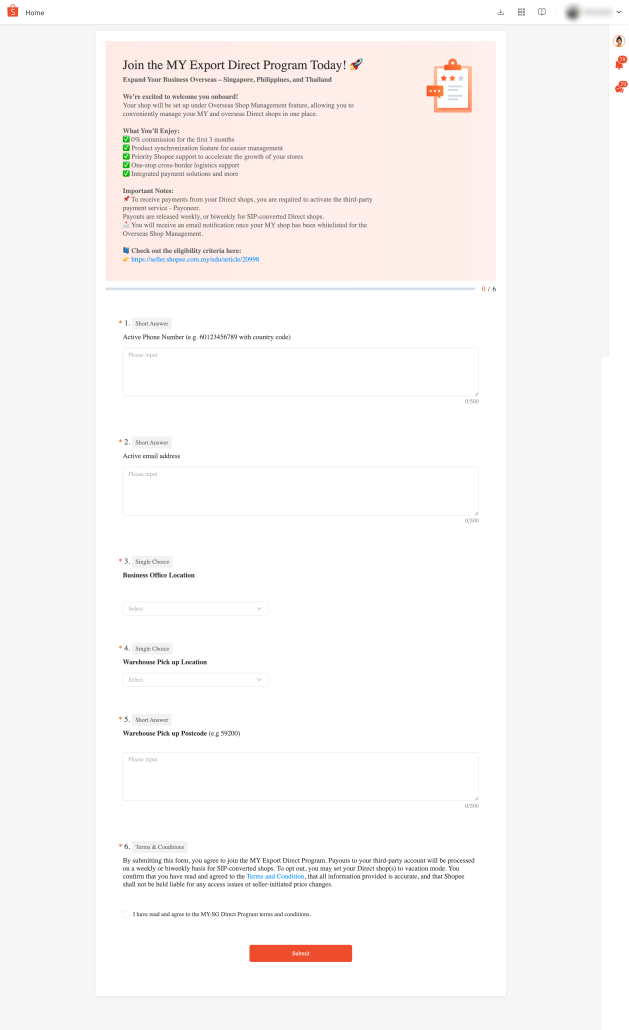
  1. Submit the Application: Fill out the official registration form found inside your Seller Education Hub.

  2. Account Activation: If approved, Shopee will create a Merchant Main-Account. You will receive an email to activate this account and bind your existing local store to the overseas market

  3. Activate Your Payment Account: Because international customers buy in their own local currencies, you must link a verified third-party payment account (such as Payoneer) to safely withdraw your funds in USD and convert them back to Ringgit.

Note: Shopee holds the final decision on seller eligibility and can update these criteria from time to time at its sole discretion.


The Hidden Challenge: Managing Multi-Channel Inventory During Rapid Growth

While setting up your new cross-border listings is a straightforward process, expanding into multiple regions introduces a brand new operational milestone: keeping your inventory perfectly aligned across all your active sales channels.

When you operate a Shopee Direct Shop alongside your existing setups on Shopee Malaysia, Lazada, and TikTok Shop, your total sales volume naturally increases. Because your international store is sharing your local Malaysian shop’s inventory, stock numbers fluctuate much faster than before.

If a specific product suddenly goes viral and sells out rapidly in Singapore or the Philippines, Stock able to sync across all your active sales channels becomes a really important features that can help to reduce overselling and avoid customer dissatisfaction due to overselling. To protect your store health ratings and prevent accidental overselling during high-traffic shopping festivals, your business requires an advanced omnichannel system that synchronizes stock levels instantly across every active global region and platform simultaneously.

The Zetpy Advantage: Seamless Cross-Border Syncing at No Extra Cost

Zetpy already supports order and inventory synchronization for Shopee Direct Shops, along with sales analytics for different currency types across all major regions covered by the programme, including Singapore (SGD), Thailand (THB), and the Philippines (PHP). Best of all, these advanced features are fully included in both our Basic and Pro plans. You get complete multi-channel protection and deep financial insights with absolutely no additional hidden costs.

Scale Your Global Sales Safely

Opening a Shopee Direct Shop is the fastest path to regional growth, but scaling requires robust infrastructure. Do not let manual stock adjustments block your expansion.

Book a Demo with Zetpy today to see how our multichannel management platform keeps your online inventory perfectly aligned across every single marketplace.

#Zetpy #ZetpyInventory #eCommerce #Shopee #ShopeeDirectShop #ShopeeDirectProgramme #ShopeeMalaysiaExportDirectProgramme

Zetpy Shopify Sync vs Zetpy’s Shopify as Master: Which Setup is Right for You?

When you expand your e-commerce operations from Shopify to marketplaces like Shopee, Lazada, and TikTok Shop, managing inventory can quickly become a headache.

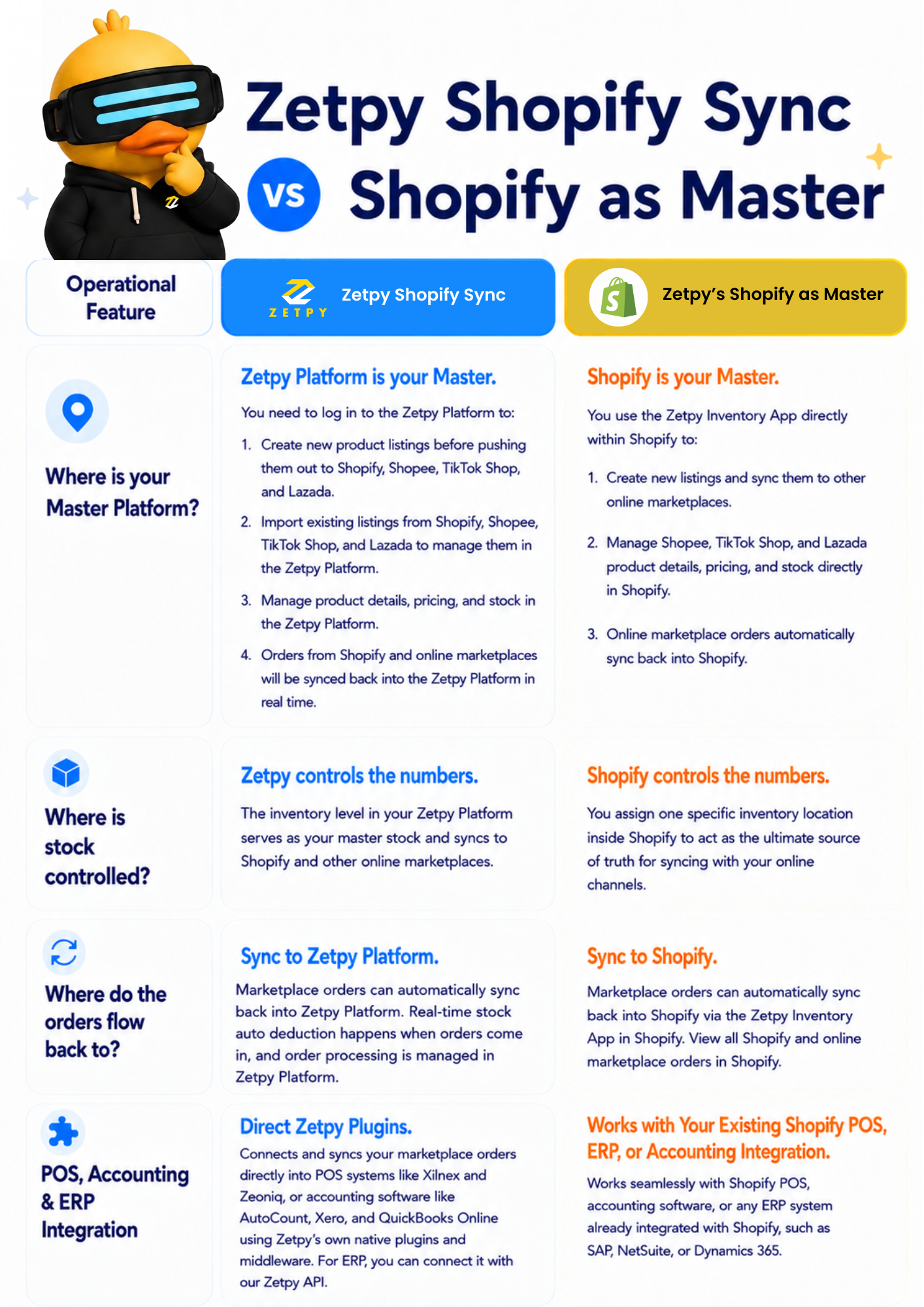
To keep your stock accurate and automate your workflows, Zetpy offers two distinct solutions: Zetpy Shopify Sync and Zetpy’s Shopify as Master.

Choosing the right setup depends entirely on where you want your Master Platform to be. The right choice simply depends on how you already run your business today, you just pick the setup that matches your current daily routine.


🔍 Which setup is right for your business?

– Profile A: Choose Zetpy Shopify Sync if you want to be a…

Marketplace-First Seller that need to talk directly to your POS, Accounting software or ERP because your Shopify store isn’t connected to it.

  1. You need a Centralized Multi-Channel Hub: You are not using Shopify as your main inventory platform but want a single, dedicated platform to build product listings once and push them out to all marketplaces (Shopee, TikTok Shop, and Lazada).
  2. Using Third Party Accounting Sync: You use accounting software like Xero, QuickBooks, or AutoCount that is not connected to your Shopify store, and you need a simple way to automatically sync your Shopify and Online marketplace sales data directly into it.
  3. Using Third Party ERP/POS Integration: If you are using a retail POS system (like Xilnex or Zeoniq) or an ERP that are not integrated to Shopify, you can use Zetpy platform as your bridge. Zetpy easily connects these external tools to your marketplaces using our powerful built-in POS plugins or open API.


– Profile B: Choose Zetpy Shopify as Master if you are an…

Shopify-first business that wants to keep doing everything inside Shopify.

  1. Need a Unified Platform Experience: You want your team to work strictly out of one dashboard. If your staff already knows Shopify inside-out, this keeps their daily operations entirely inside the native Shopify interface.
  2. Using Shopify POS Setups: You already integrated Shopify POS with your Shopify. This setup allows marketplace sales order flows into your Shopify POS to further consoldation.
  3. Having Existing ERP/Accounting software integration with you Shopify: Marketplace orders can also sync directly through Shopify into your existing ERP (like SAP or NetSuite) or accounting software.
  4. Need to have Shopify is Your Master Inventory Source: You require Shopify’s inventory to be reflected to your marketplace stock availability as it is the most accurate.


Unsure which one fits your business operations? Talk to our e-commerce experts and recommend the best data flow for your business.

👉 Book Your Free 1-on-1 Demo Here

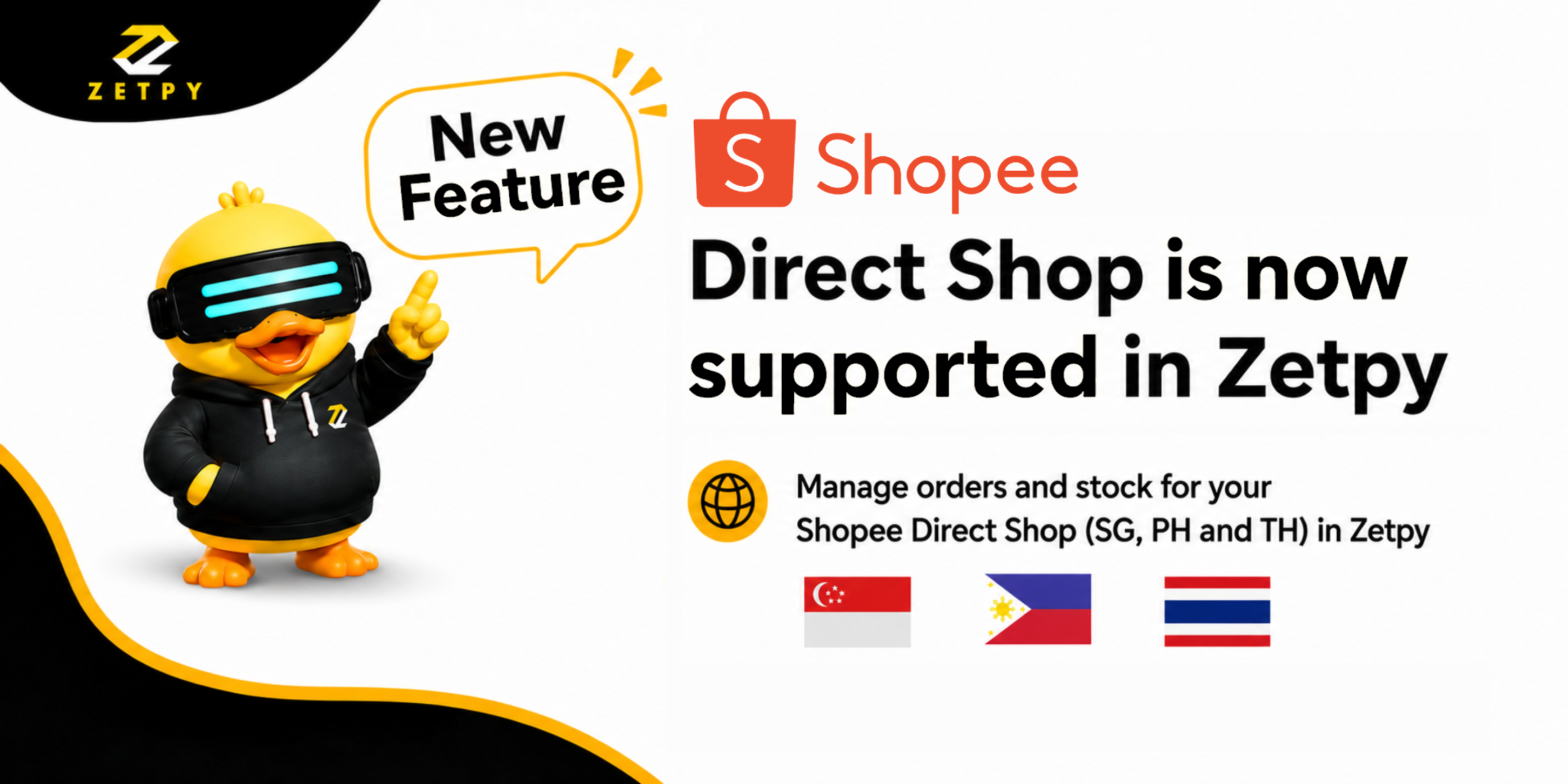
Zetpy Now Supports Shopee Direct Shop!


Selling on Shopee Singapore (SG), Philippines (PH), or Thailand (TH) means constant back-and-forth to check orders, pack parcels, or view sales, you have to keep switching store views inside the Shopee Seller Center.

Zetpy fixes this. Our new Shopee Direct Shop integration brings all your Shopee Direct Shop together into the Zetpy Inventory Platform.

How It Simplifies Your Operations

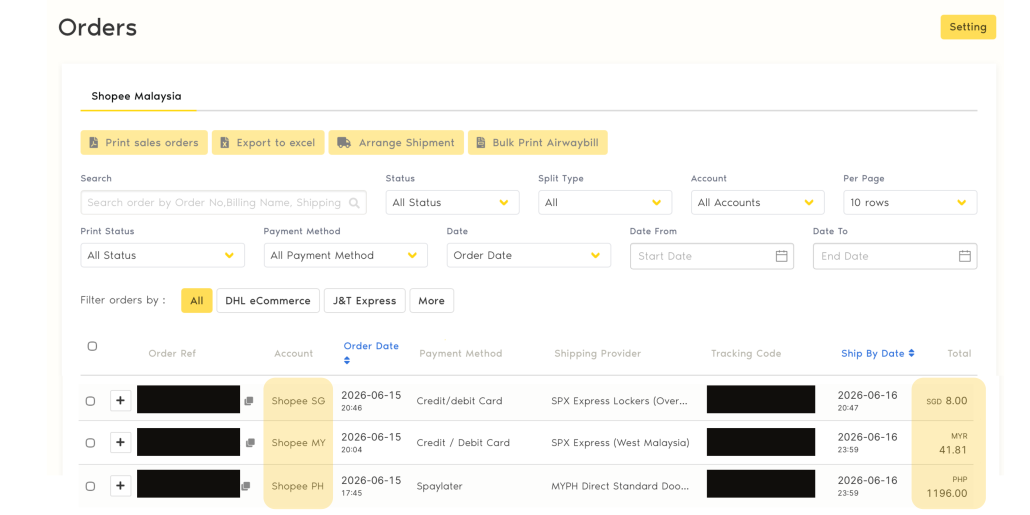
    1. One-Click Shop Switching: Inside the plugin, your Shopee Direct shops are clearly separated into different tabs. You can jump between your different country accounts with a single click. No more switching Store view.
    2. Filter and Ship by Shop: All Shopee Direct orders sync into Zetpy automatically. On the Zetpy Order page, you can easily filter your orders by specific shops as well as to process and fulfill them efficiently. Orders amount will also follow back the shop’s specific local currency (SGD, PHP, THB).


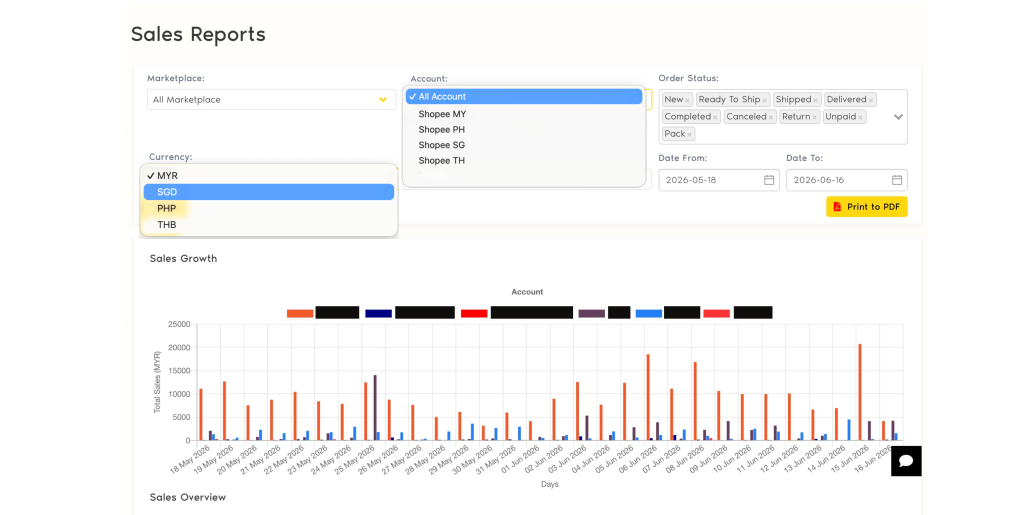
  1. Accurate Single-Page Reports: View each shop’s revenue on a single page in its specific local currency. Filter by order status such as completed orders, giving you a much more accurate view of your sales performance.

Note : Zetpy allows you to sync your Shopee Direct Shop’s Inventory and Orders as well as process the orders. For creating new products listing and adjusting localized pricing in each of the Direct Shops, you will manage them directly in the Shopee Seller Center.

See the Zetpy Dashboard in Action – Book a Free Demo Today! 🚀

💡 Related Reading: Ready to expand into Singapore, Philippines or Thailand? Check out our complete Shopee Direct Shop Guide: How to Grow Your Cross-Border Sales Easily to see if your store qualifies!

Master Your Multichannel E-commerce With Zetpy: Handle All Your Online Channels in One Place

If you are an online seller, you already know the golden rule of modern e-commerce: you need to be where your customers are. In our region, that means capturing buyers across the big three platforms: Shopee, TikTok Shop, Lazada and your own brands.com.

But as your sales channels multiply, so do your headaches.

Logging into three different seller centers, manually updating inventory after every flash sale, and trying to consolidate order details can quickly turn a booming business into a logistical nightmare. If you are spending more time managing spreadsheets than growing your brand, it’s time to rethink your strategy.

Enter Zetpy, the ultimate e-commerce solution designed to help you master your multichannel operations and handle Shopee, TikTok Shop, Lazada, Shopify, WooCommerce and Magento from a single, centralized dashboard.

Here is how Zetpy can transform the way you do business online.

1. Centralized Order Sync and Management

When a campaign hits, the last thing you want is your team frantically switching between browser tabs to fulfill orders from Shopee, TikTok Shop, and Lazada.

Zetpy automatically pulls all your orders from these major platforms into one single dashboard. You can view, process, and print airway bills (AWBs) for all your orders in bulk without ever leaving the Zetpy platform. This powerful order sync speeds up your fulfillment process and drastically reduces the risk of missed shipments or human error.

2. Real-Time Inventory Sync

Overselling is a seller’s worst nightmare. Accidentally selling an item on TikTok Shop that just went out of stock during a Shopee Live stream leads to canceled orders, frustrated customers, and penalized seller ratings.

Zetpy solves this by serving as your central inventory hub. When an item is sold on one channel, Zetpy automatically and deducts the stock in real time across your other connected channels. Whether you have 10 items or 10,000, your inventory numbers stay accurate 24/7 across Shopee, TikTok Shop, Lazada, Shopify, WooCommerce and Magento, protecting your store’s reputation and giving you peace of mind.

3. Unified Product Listings and Tailored Channel Control

Adding a new product line shouldn’t take all day. Uploading images, tweaking descriptions, and managing listings on each individual marketplace is incredibly tedious.

With Zetpy’s product catalog management, you create the core product profile just once in Zetpy and sync it to the specific channels you want. Furthermore, because every marketplace has different fee structures and audiences, Zetpy gives you total control over each listing. You can easily amend pricing and customize product details for a specific platform directly within Zetpy. This ensures your margins stay protected and your listings are optimized for each channel without impacting your core product or your other storefronts.

4. Powerful Analytics and Insights

To scale your business, you need to understand your data. Which platform is driving the most revenue? Which products are your slow movers across channels?

Zetpy consolidates your sales data to provide comprehensive reports and analytics. Instead of piecing together data from different sales channels you, you get a clean view of your entire business performance in one interface, allowing you to make smarter stock and marketing decisions.

Ready to Take Control of Your E-commerce Business?

Scaling a multichannel e-commerce business doesn’t mean you have to triple your workload. By automating the most tedious parts of online selling, including order sync, inventory updates, and product cataloging, Zetpy frees you up to focus on what actually matters: marketing, sourcing great products, and growing your brand.

Stop working for your software, and start making your software work for you.

Master your multichannel e-commerce with Zetpy today, and experience the power of truly unified selling.

Book a Free Demo Today to find out more!

Stop Creating Invoices Manually: The Smarter Way to Connect Ecommerce and Accounting

When an ecommerce brand scales, daily order volume skyrockets. While the marketing team celebrates the surge in sales, the finance department often faces a massive administrative burden.

Connecting your online marketplaces to your accounting software is essential. Without a proper bridge in place, growing brands quickly hit a severe operational bottleneck that drains resources and slows down financial reporting.

Here is why relying on manual bookkeeping is holding your brand back and how to automate the process for scalable growth.

The Nightmare of Manual Invoicing

For many growing merchants, the financial workflow is incredibly tedious. To record daily marketplace sales, the accounting team normally has to log into their software and open invoices manually, one by one.

Typing out ten orders manually is manageable. Processing five hundred orders manually is an operational nightmare. Your staff is forced to copy customer details, order amounts, and shipping deductions line by line for every single transaction.

This repetitive process creates massive risks for your business:

– High Risk of Human Error: A simple typo during manual data entry can cause your books to mismatch, creating hours of frustrating reconciliation work at the end of the month.

– Wasted Talent: Your accountants are trained to analyze cash flow and build financial strategies. Forcing them to spend days doing manual data entry is a terrible misuse of their expertise.

– Delayed Visibility: When it takes a week just to manually type out the weekend sales, your leadership team is always making business decisions based on outdated financial information.

The Smart Way: Automated Order Syncing

To build a truly scalable enterprise, you must eliminate manual data entry from your back office.

This is exactly how Zetpy transforms your financial operations. As an enterprise grade omnichannel data platform, Zetpy acts as a secure, automated bridge between your sales channels and your accounting software.

Instead of letting your staff to open invoices manually one by one, Zetpy allows you to sync every order directly into your accounting system automatically.

Free Your Finance Team to Focus on Growth

By automating your financial sync, Zetpy delivers unmatched efficiency to your enterprise.

Every transaction is mapped perfectly from the marketplace straight to your ledger with just a single click from your staff. Your finance team is finally free from the tedious grind of manual invoicing. They can redirect their focus toward high value tasks like auditing profitability and advising on growth strategies.

Most importantly, your books are constantly up to date. Your leadership team gains immediate, crystal clear visibility into the financial health of the business across.

You cannot build a fast moving ecommerce empire on slow, manual bookkeeping.

Ready to stop doing manual data entry? Book a Free 1 on 1 demo with Zetpy today to see how our automated accounting sync can secure your financial foundation and accelerate your growth.