When Should You Upgrade to an Omnichannel Management System? 5 Clear Signs
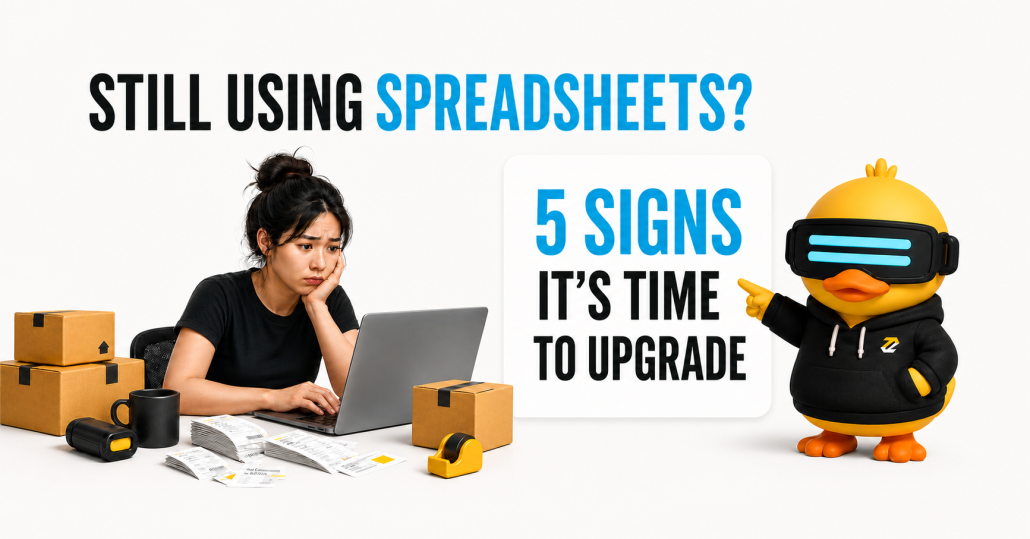
Spreadsheets can work well when you are starting an online business. You may only have a small product range, a few orders, and one sales channel to manage.
However, the same setup becomes harder to control as your business grows.
If you now sell through Shopee, Lazada, TikTok Shop, Shopify, WooCommerce, or physical stores, your team may spend too much time copying information between systems. Stock mistakes, missed orders, and slow updates can soon follow.
Here are five signs that it may be time to upgrade to an omnichannel management system.
1. Your stock numbers often do not match
You update the stock quantity in a spreadsheet. Then, you need to enter the same number in every marketplace and webstore.
The problem is that stock can change before you finish all the updates.
For example, your last unit may sell on Shopee while it is still available on TikTok Shop. Another customer could then order an item that you no longer have.
An omnichannel inventory management system gives your team one central place to manage stock. When an order comes in, the system can update the available quantity across connected sales channels.
This helps reduce the risk of overselling and cancelled orders.
2. Your team spends too much time switching dashboards
Managing separate marketplace dashboards may be fine when order volume is low. It becomes less practical when your team needs to check several seller accounts throughout the day.
Your staff may need to:
- Log in to different platforms
- Check new orders one by one
- Download or print shipping documents
- Update order statuses
- Copy sales information into another system
These small tasks can take up a large part of the working day.
A central order management system brings orders from supported channels into one dashboard. Your team can view and process orders with less switching between platforms.
Zetpy, for example, supports centralized order management for connected marketplaces and online stores. Its official pages describe order and inventory connections for channels such as Shopee, Lazada, TikTok Shop, Shopify, WooCommerce, and Magento.
3. Product updates are becoming difficult to manage
Each sales channel may require different product names, descriptions, prices, images, and variations.
When you manage everything separately, even a simple product change can become a long task. Your team may also forget to update one of the channels.
This can lead to:
- Old product information
- Incorrect prices
- Missing variations
- Inconsistent product listings
- Repeated data-entry mistakes
An omnichannel system can provide a central product list. You can manage core product information in one place and publish or update it across supported channels.
With Zetpy, sellers can create or import products and sync them to connected marketplaces and webstores.
4. Spreadsheets no longer give you a clear business view
A spreadsheet is only useful when the information inside it is complete and current.
As order volume grows, your reports may depend on several people downloading files, copying figures, and checking formulas. By the time the report is ready, the numbers may already be outdated.
This makes it harder to answer simple questions:
- Which channel is generating the most sales?
- Which products are running low?
- Do the marketplace figures match your internal records?
A centralized system can bring sales, order, product, and inventory information together. This gives your team a clearer operational view without combining multiple spreadsheets every day.
5. Growth is creating more manual work
Business growth should not mean adding another manual task every time you open a new store or marketplace account.
If each new channel requires your team to copy more products, update another stock list, and check another order page, your current process may not scale well.
This is a strong sign that you have outgrown spreadsheets.
An omnichannel platform can connect supported marketplaces, webstores, POS systems, and back-office tools. This helps information move between systems with less manual entry.
Zetpy is designed for this type of workflow. Depending on the selected setup and integrations, it can help sellers connect product, inventory, order, POS, and accounting processes. Specific features can differ by channel and integration, so sellers should confirm their required workflow before implementation.
How Zetpy can support growing online sellers
Zetpy is an omnichannel commerce platform for sellers managing multiple online and offline sales channels.
It can help businesses:
- Manage all the online channel’s products from a central platform
- Sync inventory across connected online channels
- Process all online marketplace orders from one dashboard
- Real-time sales reporting for your online channels and brands.com
- Support integration with POS and accounting.
- Reduce repeated manual data entry
Zetpy currently lists integrations with marketplaces and platforms including Shopee, Lazada, TikTok Shop, Zalora, Shopify, WooCommerce, and Magento. We also support integration with your software via API.
Is it time to upgrade?
You do not need to wait until mistakes become a daily problem.
If your staff spend hours updating stock, checking dashboards, fixing product information, or preparing reports, an omnichannel management system may be the next practical step.
The goal is not simply to replace your spreadsheets. It is to give your team a more reliable way to manage a growing online business.
Ready to explore a more connected workflow? Book a Zetpy demo to discuss your sales channels, order process, and inventory setup.