Important Notice: Lazada Open Platform to Mask Buyer Data Starting July 1, 2026
At Zetpy, we prioritize keeping your e-commerce operations secure, compliant, and ahead of industry changes. We want to update you on an upcoming shift regarding data security and user privacy from one of our major marketplace partners – Lazada.
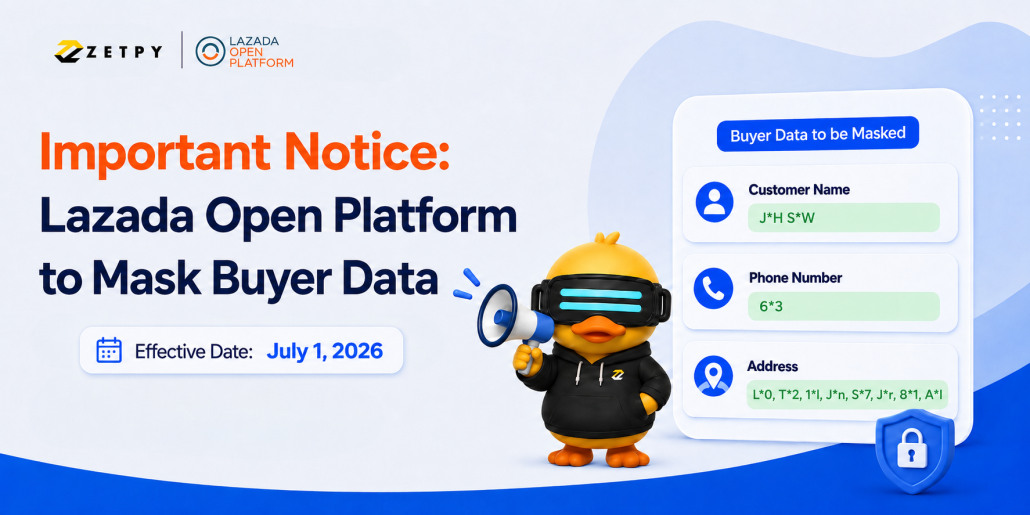
Starting July 1, 2026, the Lazada Open Platform will officially begin encrypting and masking buyer personal information within order data retrieved through its APIs.
This data privacy measure aligns Lazada with a broader global e-commerce movement toward tighter consumer data security. To help you prepare, here is everything you need to know about the update and how it impacts your operations on Zetpy.
What is PII and Why Is This Happening?
In the e-commerce and technology sectors, customer details like names, phone numbers, and addresses are classified as Personally Identifiable Information (PII). PII refers to any data that can independently or collectively trace and identify a specific individual.
Regulatory standards around data compliance have tightened significantly. Marketplaces are progressively moving away from exposing open customer text fields to protect consumers from potential data breaches and scam vulnerabilities.
This is a well-established pattern across the e-commerce industry:
- Shopee pioneered this shift regionally in August 2021 by launching its own open platform buyer info masking strategy.
- Shopify introduced strict access governance, restricting basic or starter plan merchants from accessing “Custom Level 2 PII” via standard apps.
Lazada’s update represents the next step in this industry-wide commitment to digital ecosystem security.
Frequently Asked Questions (FAQs)
1. What specific details will be affected?
Starting July 1, 2026, you will no longer receive full, unmasked customer records via the Lazada Open Platform API. The changes primarily affect:
Buyer Name (First and Last name will contain asterisks, e.g.,
J***s)Phone Number (Hidden except for the final digits)
Delivery Address (Formatted or masked to preserve individual anonymity)
Below is one example given by Lazada
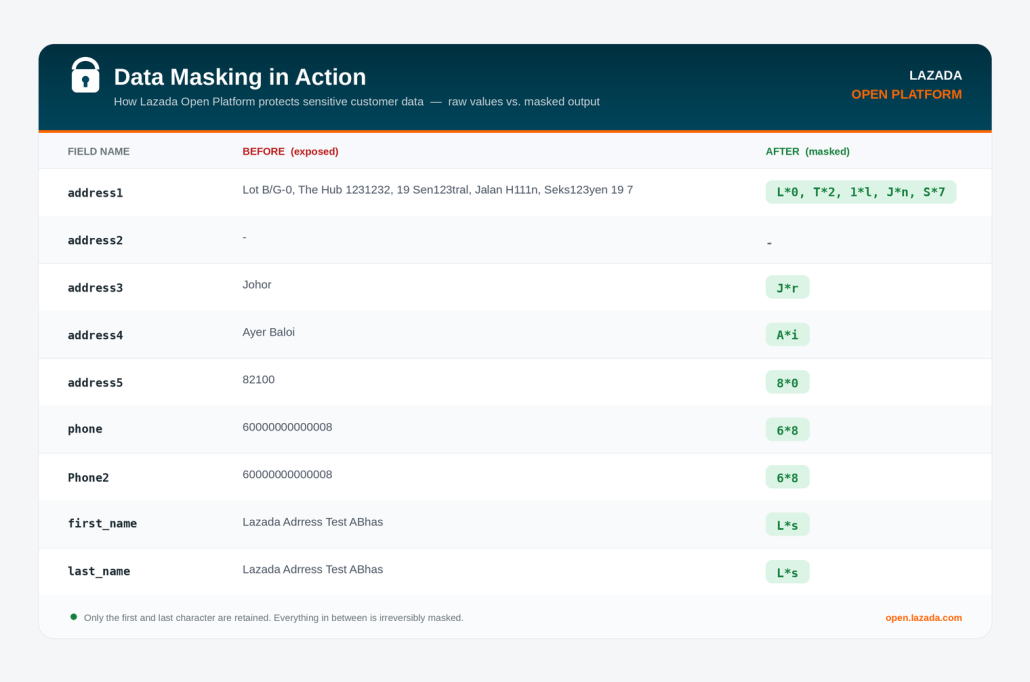
Lazada Open Platform – API – Customer Details Masking
2. Do I need to perform any action or updates in Zetpy?
No. There is no manual action required on your part. The Zetpy engineering team is managing the infrastructure update on our backend to ensure a stable integration with Lazada’s updated API protocols.
However, you will notice that new Lazada order records synced to the Zetpy Inventory Platform will reflect this masked format. This is normal behavior and means your store is fully compliant with Lazada’s data protection policy.
3. Are there any exceptions to this rule?
Yes. Lazada provides exceptions for merchants operating under the Delivery by Seller (DBS) model—formerly known as Seller Own Fleet (SOF).
If you fulfill orders via your own logistics networks (common for large or bulky items like furniture and major appliances), you can apply for a data unmasking exemption directly through the Lazada Open Platform. Lazada understands that local dispatch teams require raw address and contact names to successfully complete independent fulfillment.
Looking Ahead
While adjusting to masked buyer data can feel like a shift in your usual order-matching routine, it represents a healthier, more secure foundation for online retail. Rest assured that Zetpy continues to fully sync your inventory, product details, and core order management workflows smoothly across all marketplaces.
If you have any further questions or require assistance checking your DBS status, please reach out to our Zetpy Support Team. We are here to navigate this transition together.
Official References for Further Reading:
-
Lazada Announcement: Lazada Open Platform – Encryption of Buyer Information for Orders
-
Shopify Reference: Shopify Help Center – About Protected Customer Data
-
Shopee Reference: Shopee Open Platform – Buyer Info Masking Policy
-
TikTok Shop Reference: Accessing Customer’s Information